















Categories
Fireplaces & Carbon Monoxide - What You Need To Know
Note: This article is purely for informational purposes. For medical advice, speak to your doctor, and for safety advice, please contact a professional health and safety organisation such as the HSE.
If you’ve looked into installing a new fireplace or wood burner in your home, then chances are you’ve probably come across the subject of carbon monoxide and its potential dangers.
It’s important that you are fully aware of what it is, its dangers and how to guard against it. Let’s go through some of the basics…
What is carbon monoxide?
Carbon monoxide (CO) is a poisonous gas produced when fuels that contain carbon, such as wood, coal and natural gas, burn incompletely. It occurs when fuel is burnt without enough oxygen present - if there is enough oxygen then carbon dioxide (CO2) is produced instead.
Why is carbon monoxide dangerous?
If you breath in carbon monoxide fumes, it reduces the amount of oxygen in the blood, which over time can cause your organs and cells to die - this is carbon monoxide poisoning.
It is an odourless, colourless and tasteless gas, which is why it’s potentially so hazardous,. Known as ‘the silent killer’, the only way to detect it is by using a carbon monoxide detector.
The symptoms of carbon monoxide poisoning include nausea, headaches, dizziness, fatigue, vomiting, shortness of breath and loss of consciousness. Accidental carbon monoxide poisoning kills around 25 people every year in England and Wales according to the NHS.
You can find more about the health risks and how to deal with carbon monoxide poisoning on the NHS website.
What causes carbon monoxide exposure?
We’ve already mentioned where carbon monoxide comes from, but what are some of the most common ways that you might come into contact with it, specifically relating to your fireplace?
- Unventilated or badly ventilated spaces - if you’re burning fuel where there is little or no ventilation then CO is likely to build up.
- Faulty, damaged or unserviced appliances - boilers, gas fires, open fires, central heating systems, cookers, and water heaters can all produce carbon monoxide.
- Blocked chimneys or flues
- Un-emptied ash buckets and fire baskets.
There are various other causes of carbon monoxide, including paint fumes, running engines such as cars or lawnmowers in garages, and using cooking appliances for heating.
Signs of carbon monoxide
While carbon monoxide may be virtually unnoticeable to your sense, there are some telltale signs that you could have a problem.
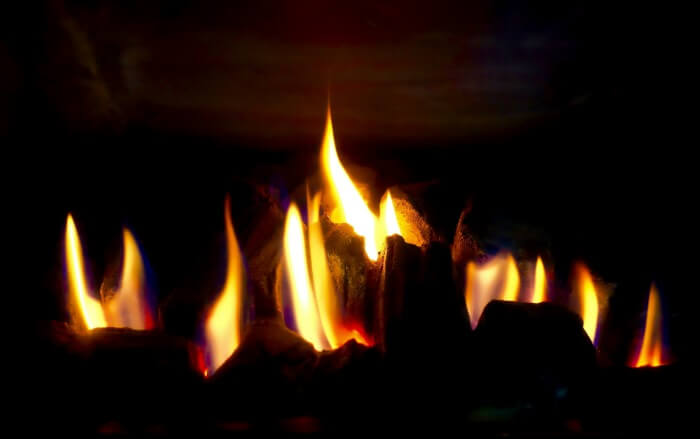
- Yellow flames instead of blue flames on gas appliances.
- Smoke building up in rooms - this could be due to a faulty flue
- Black, sooty stains on the walls around fires and water heaters, as well as on the front covers of gas fires.
- Pilot lights often going out.
It is possible to be at risk of carbon monoxide poisoning if a conjoined property has a leak, so even if your appliances are working fine, it’s still important to be aware of the signs.
How to prevent carbon monoxide leaks & poisoning
Here are some fireplace related tips to help prevent carbon monoxide leaks and keep you and your family safer.
- Ensure that any rooms that contain a fire or stove are well ventilated, and that any ventilation isn’t blocked.
- Get your chimney swept to ensure it’s clean and free from blockages, and make sure it’s not damaged in any way.
- Get your fire fitted by trained, qualified fireplace installer - for example, all gas fire fitters must be on the Gas Safe Register.
- Make sure all appliances are serviced regularly and are in good working order.
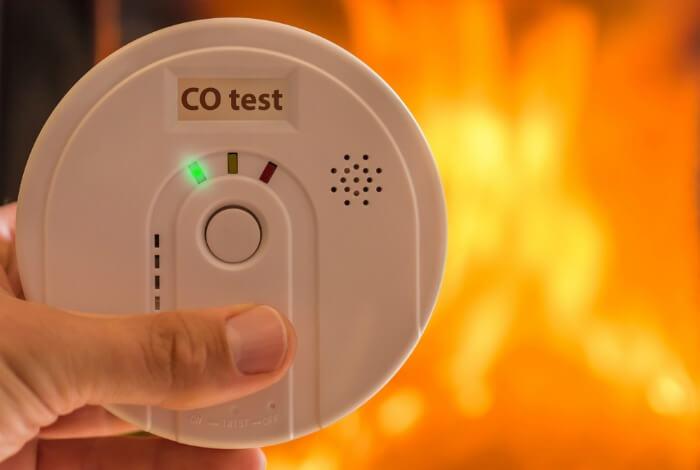
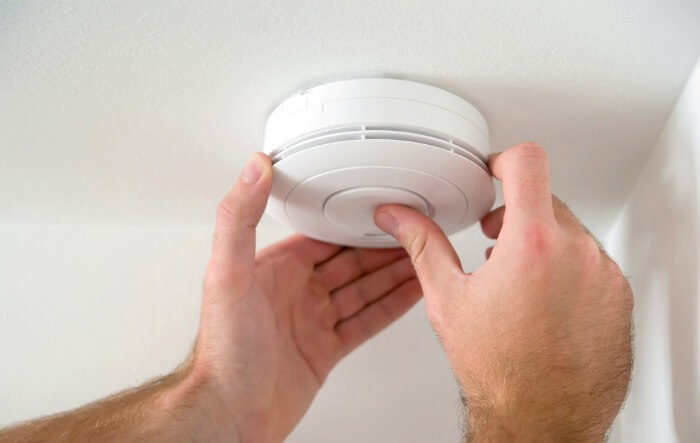
- Install a carbon monoxide tester and alarm, and test it regularly to ensure it works.
- Don’t sleep in a room that has an unflued gas fire.
- Choose a gas fire with built-in safety features - for example, Kinder gas fires come with a Flame Supervision Device (FSD) that prevents uncontrolled release of gas unless there’s a flame, and an Oxygen Depletion Sensor (ODS) that shuts off the gas supply in the even of a fault.
- If you have a stove or open fire, don’t leave ash in there for too long. Ash gives of CO, and while the amount will usually be minimal, it’s best not to take any chances.
What to do if you suspect a carbon monoxide leak
If you think you have a carbon monoxide leak, from your fireplace or any other appliance in your home, here’s what to do…
- Stop using and turn off all appliances.
- Ventilate the property as much as you can by opening doors and windows.
- Evacuate the property.
- Call the gas emergency number on 0800 111 999 to report the incident, or the Health and Safety Executive (HSE) Gas Safety Advice Line on 0800 300 363.
- Get checked by a doctor - even if you feel fine, you should still get everyone who was in the property looked at by a medical professional to be on the safe side.
You can find out more about carbon monoxide on the NHS website, as well as gas safety at the Health and Safety Executive website.