

















Categories
The Best Electric Fire Buying Guide for 2026
⏱️ Time to read:
18–27 minutes
Electric fires are the easiest way to add a fireplace to your home — but choosing the best one for you isn’t as simple as picking the nicest flame.
Between styles, sizes, flame technologies, and installation options, it’s easy to end up with something that looks underwhelming or doesn’t suit your space.
This guide focuses on what actually matters, so you can get it right the first time — and avoid the common mistakes most buyers only realise after installation.
🧠 Quick Answer: What are the best electric fires in 2026?
The best electric fires in 2026 are the ones that match your installation type first — whether that’s a media wall, suite, inset, or wall-mounted fire — and then offer the most realistic flame effect within that category.
For most homes, modern electric fires perform similarly in terms of heat output (typically 1–2kW), so the real difference comes down to how realistic the flame looks and how well the fire fits your space.
🔑 Key Takeaways
- Electric fires are a visual feature first, heater second: Don’t choose based on kW alone
- All electric fires are 100% efficient at point of use: No chimney losses, no wasted heat
- Flame-only mode costs pennies to run: Typically 1–2p per hour
- Installation is flexible: Most models plug into a standard socket
- Flame realism varies massively between models: This is where budget differences actually show
- Showroom viewing changes decisions: Photos flatten depth, brightness, and detail
📍 In this guide
Short on time? Skip straight to what you need.
- What is an Electric Fire?
- How Do You Choose the Right Electric Fire?
- What Most Guides Won’t Tell You
- Types of Electric Fires
- Media Wall & Built-In Electric Fires
- Freestanding Electric Fireplace Suites
- Wall-Mounted Electric Fires
- Inset Electric Fires
- Hole-in-the-Wall Electric Fires
- Heat Output & Room Size
- Which Flame Effect Looks Most Realistic?
- Sound, Media, and Smart Controls
- How Much Does an Electric Fire Cost to Run?
- Installation: The Plug In & Go Advantage
- The Best Electric Fires by Type
- Frequently Asked Questions
Your Guide to Getting the Right Electric Fire for You
What is an Electric Fire?
An electric fire is a plug-in heating appliance that uses LED or projection technology to create a realistic flame effect, with optional heat output typically between 1kW and 2kW. Unlike gas or wood fires, it requires no chimney, flue, or ventilation, and can be used with or without heat.
How Do You Choose the Right Electric Fire?
To choose the right electric fire, follow these steps:
- Choose your installation type – media wall, inset, wall-mounted, or freestanding suite
- Match heat output to room size – usually 1kW to 2kW for supplemental warmth
- Prioritise flame effect quality – Standard LED, 3D LED, or water vapour depending on your preference
In most cases, the decision comes down to three things: installation type, flame effect, and heat output — in that order.
💡 Worth Knowing: “Rotisserie” flame effects use a rotating internal element rather than a flat projection, which creates deeper, more natural flame movement. This is why many premium electric fires — particularly models from Evonic Fires — look significantly more realistic in person than standard LED designs.
Most buying mistakes come from focusing on the wrong things — here’s what actually matters.
| Your Main Priority | What Matters | What to Avoid |
|---|---|---|
| Realistic flame effect | 3D LED / rotisserie / vapour | Basic LED flame effects |
| Heat output | 1–2 kW is standard | Choosing based on kW alone |
| Easy installation | Match to your room | Forcing a media wall into the wrong space |
| Running costs | Flame-only efficiency | Assuming high running costs |
If you’re unsure, choose your installation type first — then focus on the features that matter most to you within that category.
👉 Need more heat than electric can provide? A gas fire might be a better fit. Read our guide to the different gas fire types to see which is right for your home.
What Most Guides Won’t Tell You
Before we dive into styles and sizes, let’s clear up a few things we see come up again and again in our showrooms.
You’re choosing the flame effect first, with heat as a bonus
Let’s be completely transparent: an electric fireplace isn't meant to be the primary heat source for your entire home.
Most electric fires on the UK market operate at a typical 1kW to 2kW heat output. This is perfect for taking the chill off your living room on a crisp October evening without having to switch on the central heating for the whole house.
You’re investing in how it looks and feels first. The heat is a nice extra.
Photos vs. real-life flame effects
If you are browsing online, keep this in mind: cameras struggle to capture the true depth of modern electric flame effects.
High-definition LED effects and layered 3D visuals can look slightly flat or overly bright in static photographs.
The depth of the fuel bed, the subtle smouldering of the hand-painted logs, and the gentle flicker of the flames are far more realistic and mesmerising in real life.
👉 Chasing realism? Read this first.
Flame effects vary massively between models. If you want something that actually looks like a real fire — not just a glowing screen — see our guide to the most realistic electric fires.
The “flame-only” secret to low running costs
One of the best things about an electric fire is the “flame-only” setting. Because the visual effects use ultra-efficient LED technology, you can run the flame display for just a few pennies an evening, enjoying the cosy aesthetic year-round — even in the middle of summer — without generating unwanted heat.
💡 Worth Knowing: Lower flame brightness usually looks more realistic than full brightness — especially at night — and uses slightly less energy at the same time.
Types of Electric Fires: Which Style is Right for Your Home?
Instead of just listing fires, let’s match the right type of electric fire to your room layout and design goals.
Here’s a quick comparison of the main electric fire types:
| Type | Best For | Building Work | Look |
|---|---|---|---|
| Inset | Existing fireplaces | None/low | Traditional |
| Wall-mounted | Flat walls | Low | Modern |
| Suite | No chimney | None | Full fireplace look |
| Built-in | Media walls | Medium | Premium |
| Hole-in-the-wall | Small spaces | Medium | Minimalist |
The best electric fire for your home depends on your room size, layout, and whether you want a built-in feature or a plug-and-play solution.
Building a Cinematic Focal Point?

The Solution: Media Wall & Built-In Electric Fires
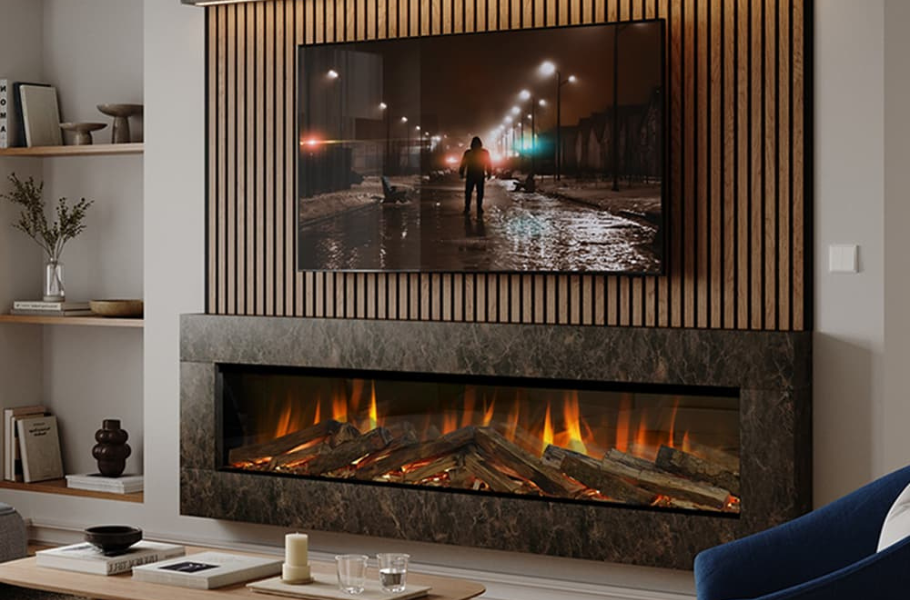
Media walls are now a go-to choice for modern living rooms, creating a clean, built-in focal point. These fires sit flush within a stud wall, usually installed beneath a wall-mounted TV.
As they direct heat forwards rather than upwards, they’re suitable for installation below a TV when fitted according to the manufacturer’s guidelines.
🔥 Product examples:
- Best for large, luxury media walls: Evonic Halo 1500 XT Built-In Electric Fire
- 🫶 Why we love it: This is a proper statement piece. At 1500mm wide, it creates a full-width, cinematic focal point that anchors the entire media wall. The flame animation is smooth and highly realistic, and smart controls give you full flexibility over how it looks and feels in your space.
- Best for medium-sized living rooms: Vision Futura 1300 Electric Inset Wall Fire
- 🫶 Why we love it: It hits the sweet spot between impact and proportion. You still get a wide, cinematic flame view, but without the scale of larger models that can dominate a room. The flexible 1, 2, or 3-sided setup makes it easy to adapt to different layouts.
💡 Worth Knowing: 1-sided fires are best for standard walls, 2-sided models work well in corners or feature walls, and 3-sided fires are designed for open, panoramic layouts where the fire is visible from multiple angles.
Choose this style if:
- ✅ You’re building a media wall or feature wall
- ✅ You want a wide, panoramic focal point
- ✅ Your TV will sit above the fire
👉 Want a media wall, but not sure where to start? Our complete guide to planning a media wall has everything you need to know.
No Chimney or Renting? No Problem.

The Solution: Freestanding Electric Fireplace Suites
If you live in a new build or a flat without a chimney breast — and you don’t want to undertake building work — an electric suite is your best friend. These come as a complete package, including the surround, hearth, and fire. You simply place them against a standard wall and plug them into a standard socket.
They’re also ideal for renters. Because there’s no drilling, recessing, or permanent installation, you can take the entire suite with you when you move — no damage, no patching walls, no arguments with your landlord.
🔥 Product examples:
- Best for instant elegance: Evonic e-Lectra Vanquish Floor Standing Suite
- 🫶 Why we love it: It gives you that grand, architectural fireplace look without any building work. The proportions and finish feel properly premium, turning it into a focal point straight away — no installation stress, just position and plug in.
- Best for modern minimalism: Flare Salehurst Electric Fireplace Suite
- 🫶 Why we love it: It gives you a full fireplace look without the visual bulk. The clean lines and contemporary finish keep things minimal, while the realistic log bed adds just enough warmth and detail to stop it feeling flat.
👉 Not sure which suite is right for your space? Read our guide to choosing the right electric fireplace suite.
Choose this style if:
- ✅ You don’t have a chimney or fireplace opening
- ✅ You want a complete fireplace look with no building work
- ✅ You prefer a plug-and-play solution
👉 Renting your home? Read our guide to the fires that won't upset your landlord — keep warm and keep your deposit.
Want a Minimal-Construction, Modern Look?

The Solution: Wall-Mounted Electric Fires
These fires mount directly on your wall, much like a picture frame or a flat-screen TV. They're ideal for anyone who wants a sleek, contemporary focal point — without the hassle of building a stud wall or cutting into plasterboard.
🔥 Product examples:
- Best for ultra-modern styling: Celsi Electriflame VR Volare Wall Mounted Electric Fire
- 🫶 Why we love it: It turns a blank wall into a clean, modern focal point with minimal effort. The glass fascia keeps the look sharp and contemporary, while the flame effect adds depth without needing any building work.
- Best for compact spaces: Flare Azonto Wall Mounted Electric Fire
- 🫶 Why we love it: It gives you a clean, modern flame effect without taking over the room. The compact design makes it ideal for smaller spaces, adding a focal point without overwhelming the layout.
Choose this style if:
- ✅ You want a fire without any recess or building work
- ✅ You’re mounting directly onto a flat wall
- ✅ You prefer a modern, TV-style installation
Upgrading an Existing Fireplace Opening?

The Solution: Inset Electric Fires
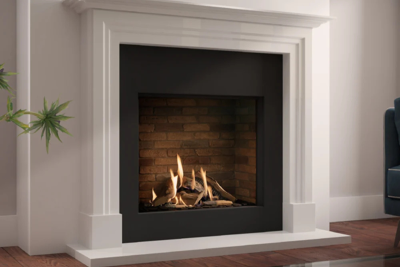
If you have an older home with an existing standard 16-inch or 22-inch fireplace back panel opening (where an old gas or solid fuel fire used to sit), an inset electric fire will slot right in.
🔥 Product examples:
- Best for traditional openings: Celsi Ultiflame Ultra Autograph Inset Electric Fire
- 🫶 Why we love it: It’s an easy way to modernise an existing fireplace without changing the structure. The flame effect has real depth, bringing old, unused chimney breasts back into the room as a proper focal point.
- Best on a budget: Flavel Proflame Autograph Inset Electric Fire
- 🫶 Why we love it: If you just want to refresh your fireplace without spending a fortune, this does the job. It’s straightforward, well-finished, and a noticeable upgrade from older inset fires.
Choose this style if:
- ✅ You already have a fireplace opening or chimney breast
- ✅ You want to upgrade an old gas or solid fuel fire
- ✅ You prefer a built-in, traditional look
Short on Floor Space?

The Solution: Hole-in-the-Wall Electric Fires
If you’re working with a narrower room or want a more minimalist finish, hole-in-the-wall fires are set higher into the wall, freeing up floor space and pulling the focus upward.
🔥 Product examples:
- Best for panoramic views: BlazeBright Oxford Deep Lux 1500 Hole in The Wall Fire
- 🫶 Why we love it: It creates a wide, immersive flame view that you can see from multiple angles in the room. The deeper fuel bed adds real presence, and the option for 1, 2, or 3-sided glass lets you shape it around your layout.
- Best for a clean, minimalist look: Dimplex Ignite Evolve 50 Electric Fire
- 🫶 Why we love it: It delivers a wide, frameless flame view with a much slimmer, more understated profile than deeper “lux” models. If you want a hole-in-the-wall fire that feels sleek rather than dominant, this is one of the best-balanced options available.
Choose this style if:
- ✅ You’re short on floor space
- ✅ You want a clean, minimalist look
- ✅ You like a slightly elevated, modern focal point
Understanding Heat Output & Room Size
Most electric fires operate between 1kW and 2kW. They're 100% efficient at the point of use, which means all the heat stays in the room rather than being lost up a chimney.
Quick Sizing Table: Heat Output vs. Room Size
| Room Size | Recommended Heat Output | Best Use Case |
|---|---|---|
| Small (up to 12 sq. m) | 1kW – 1.5kW | Bedrooms, home offices, small snugs |
| Medium (12-20 sq. m) | 1.5kW – 2kW | Standard living rooms, dining rooms, conservatories |
| Large (20+ sq. m) | 2kW+ | Open-plan living spaces, large lounges |
💡 Worth Knowing: In a well-insulated home, you'll probably find that 1–2kW heat output is more than enough.
Which Electric Fire Flame Effect Looks Most Realistic?

Flame effect technology is the difference between an average electric fire and a premium model. This is what defines the fire's depth, movement, and realism.
- Standard LED flames:
Uses a mechanical spindle and LED lights to project a 2D flame onto a rear screen. Highly reliable and cost-effective — but not the most realistic. - 3D LED / rotisserie effects:
These use rotating elements, layered lighting, and detailed fuel beds to create a deeper, more lifelike flame effect than standard flat projections. The flames look like they're actually coming from between the logs, not just behind them. - Ultrasonic water vapour (e.g., Optimyst®):
These fires use ultrasonic technology to create a fine water mist illuminated by LEDs. This produces a rolling, 3D smoke and flame effect that looks and behaves far more like a real flame than a standard projection. - Multi-coloured / smart flames:
Want a blue flame for summer evenings, or a deep orange glow for chilly winter nights? Modern electric fires let you adjust flame colour, brightness, and fuel bed lighting to suit your space, mood, or time of day.
👉 If realism is your top priority, it’s worth comparing the most realistic electric fires in our range. This is where premium models start to justify their price.
Beyond the Visuals: Sound, Media, and Smart Controls
The realism of a modern electric fire isn’t just visual — it’s also how you interact with it.
- The crackle effect:
Some premium models come with built-in audio modules that play the authentic sound of crackling logs, giving you the full "wood fire" experience — without the clean-up. - Fuel bed customisation:
You don't have to settle for standard plastic logs. High-end fires come with interchangeable fuel beds. Swap between rustic woodland logs, silver birch, clear crystals, or white pebbles depending on your interior design mood. - Smart home connectivity:
Gone are the days of losing the remote down the back of the couch cushions. Many of the best electric fires now come with app control and smart home compatibility. Ask Alexa to change the settings from upstairs, or turn the fire on from your phone before heading home from work.
How Much Does an Electric Fire Cost to Run in the UK?
Rising energy bills are no joke. It’s worth understanding what an electric fire will actually cost to run.
In the UK, electric fire running costs range from just 1–2p per hour (flame only) to around 50p per hour on maximum heat, depending on your electricity tariff.
Electric fires are best used for zonal heating — turning your central heating down low (or off) and using the fire to warm the space you are in instead. While electricity typically costs more than gas per kWh, most people start to see savings when they stop using the central heating to heat empty rooms every evening.
👉 Want to reduce your energy bills without sacrificing warmth? Read our guide to the most efficient way to heat your home.
Running costs are simple to calculate:
If your electricity costs around 25p per kWh, running a 2kW electric fire on full heat would cost roughly 50p per hour.
In reality, it rarely runs like that for long. Most modern fires have thermostats that switch the heat on and off to maintain the temperature, so you’re not paying for constant full-power use.
And if you’re just using the flame effect, the cost drops dramatically — often to less than 2p per hour.
Installation: The “Plug In & Go” Advantage

One of the biggest reasons people choose electric is how simple the installation is.
- No Gas Safe engineer required:
Unlike gas fires, you don’t need a certified installer just to get up and running. Most electric fires simply plug into a standard socket, which makes the whole process much more straightforward. - No flue needed:
There’s no combustion involved, so you don’t have to think about carbon monoxide, ventilation bricks, or chimney sweeping. It removes a lot of the ongoing maintenance that comes with gas or solid fuel. - Flexible installation:
Whether you’re recessing something like a Dimplex Ignite Evolve into a media wall or slotting an inset fire into an existing opening, installation is usually a straightforward DIY job — or a quick task for a local tradesperson if you’d rather not tackle it yourself.
💡 Worth knowing: If you’re building a media wall, the depth is one detail that’s easy to overlook. Some ultra-slim fires only need around 150mm of space, while deeper, more realistic models can require 300mm or more to house the fuel bed properly.
Best Electric Fires (Examples by Type)
If you’re trying to decide which electric fire is right for your home, it helps to see real examples of each type done well. These aren’t just popular models — they represent what to look for in terms of flame quality, installation, and overall finish.
The ‘best’ electric fire depends on what you need — installation type, flame realism, and room size matter more than brand alone.
🔥 Media wall electric fires (wide, built-in)
- Example: Evonic Halo 1500 XT Built-In Electric Fire
- What to look for: smooth flame animation, wide viewing area, minimal frame
- → Best if you want a modern, built-in feature fire
🔥 Realistic flame effect electric fires
- Example: Dimplex Ignite Evolve 50 Electric Fire
- What to look for: natural flame movement, depth, fuel bed lighting
- → Best if realism is your priority over size or installation type
🔥 Water vapour electric fires
- Example: Dimplex 3 Step Multi Optimyst® Built-In Electric Fire
- What to look for: 3D flame effect, visible “smoke”, depth
- → Best if you want the closest thing to a real flame visually
🔥 Electric fireplace suites (plug-and-play)
- Example: Evonic e-Lectra Vanquish Floor Standing Suite
- What to look for: integrated surround, easy installation, balanced proportions
- → Best if you want a full fireplace without building work
🔥 Wall-mounted electric fires
- Example: Celsi Electriflame VR Volare Wall Mounted Electric Fire
- What to look for: slim profile, good flame depth, clean wall fit
- → Best for simple installs and modern spaces
🔥 Inset electric fires (existing fireplaces)
- Example: Celsi Ultiflame Ultra Autograph Inset Electric Fire
- What to look for: depth, realistic fuel bed, clean fit into openings
- → Best for upgrading an existing fireplace
Expert Answers to Your Frequently Asked Questions (FAQ)
What size electric fire do I need for my room?
Most electric fires output between 1kW and 2kW. For small rooms (up to 12 sq. m), 1–1.5kW is usually enough. For medium to larger rooms (12–20+ sq. m), a 2kW model is more suitable.
Electric fires are designed to provide supplementary heat, not heat your entire home, so focus on taking the chill off rather than matching central heating output.
Are electric fireplaces expensive to run in the UK?
Not necessarily. At around 25p per kWh, a 2kW electric fire costs roughly 50p per hour on full heat.
In practice, thermostats cycle the heater on and off, so it rarely runs continuously. Flame-only mode is much cheaper, typically costing just 1–2p per hour.
Can electric fires be used without heat?
Yes. Most modern electric fires have a flame-only setting, so you can enjoy the visual effect without any heat.
This makes them ideal for year-round use, including summer.
What’s the difference between an inset fire and a suite?
An inset fire is designed to fit into an existing fireplace opening or wall cavity.
A suite is a complete, freestanding unit that includes the fire, surround, and hearth, and sits flat against a wall with no building work required.
Can I install a TV directly above an electric fireplace?
Yes. Most electric fires direct heat forwards or downwards rather than upwards, making them suitable for installation below a TV when fitted according to the manufacturer’s guidelines.
Do I need an electrician to fit an electric fire?
In most cases, no. Freestanding, wall-mounted, and many inset electric fires plug into a standard socket.
For built-in installations where cables are hidden, using a qualified electrician or installer is recommended.
Do electric fires need servicing?
No. Electric fires don’t produce real flames, so there’s no soot, ash, or carbon monoxide risk.
There’s no annual servicing required — just occasional cleaning and keeping vents clear of dust.
What is the most realistic electric fire on the market?
The most realistic electric fires typically use either water vapour technology or advanced LED systems like rotisserie flame effects.
Brands such as Evonic, Dimplex, and Celsi are known for producing some of the most convincing flame effects currently available.
Now You Know What to Look For — Here’s What to Do Next
Whether you are looking for a classic inset electric fire to revive an old chimney, a handy plug-and-play electric suite, or a luxury panoramic fire for your new media wall, we’ve got options to suit your space.
👉 Browse our full range of electric fires to find the right fit for your home.
Looking for more electric fire info? Read our guides:
- 👉 Media wall electric fire buying guide
- 👉 Which electric fires look most realistic?
- 👉 The complete guide to planning a media wall with an electric fire
- 👉 How to replace a fire in an existing media wall
- 👉 Guide to electric fireplace suites - find the best one for you
- 👉 Electric vs gas fires: which is best?
- 👉 What are the best electric fires with smart controls?
- 👉 Your biggest questions about Evonic Fires - answered
Still unsure or want to compare electric fires in person?
- 📍 Visit us: Compare a huge range of electric fire styles, brands, and flame effects at our showroom.
- 📧 Get in touch: Contact our team for personalised advice on choosing the right electric fire for your space.
↑ Back to top | Jump to sections ↑
