













Categories
Does an Open Fire Save Money? (Short Answer: No — Here’s What Actually Does)
⏱️ Time to read:
10–14 minutes
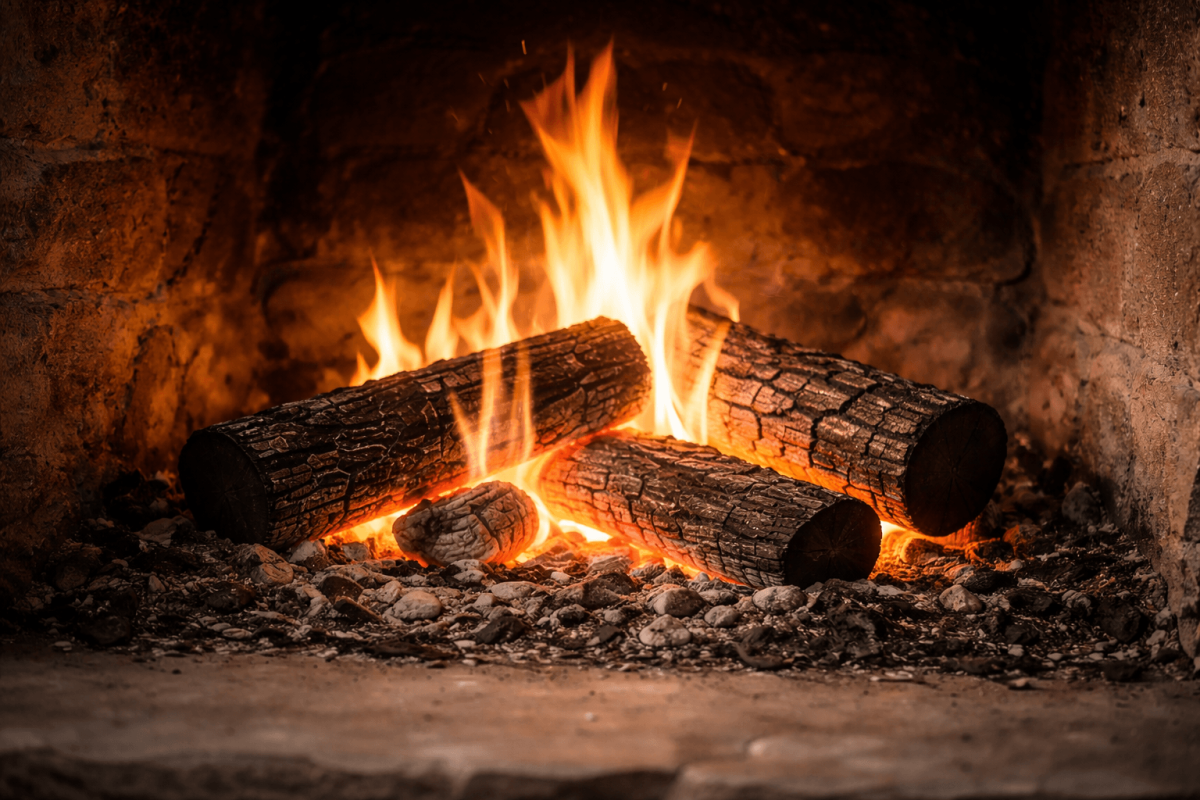
With energy bills a significant household expense, many of us are looking for ways to cut back on central heating. Lighting up a traditional open fireplace seems like an obvious solution. After all, you’re heating the room you are in and turning down the radiators elsewhere. It feels like a guaranteed way to save money.
However, while open fires feel incredibly cost-effective, they usually aren’t — and in many cases, they actually increase your heating costs.
Based on what we see from customers comparing different heating options, open fires are often chosen for their look and feel — but rarely for their efficiency.
🧠 Quick Answer: Does an open fire save money?
No — open fireplaces do not save money on heating bills.
They are highly inefficient, typically converting only 10–20% of their fuel into usable room heat. Worse still, an open chimney acts like a vacuum, drawing the warm air your central heating has already generated right out of your home.
If your goal is to reduce heating costs, more efficient options like gas or electric fires are far more effective.
🔑 Key Takeaways
- Open fires are highly inefficient: Only 10–20% of the heat generated enters the room.
- Massive heat loss: Up to 90% of the heat goes straight up the chimney.
- They create draughts: Open chimneys pull warm air out of the rest of the house, making everywhere else colder.
- Reducing heating isn’t the same as heating efficiently: They may allow you to turn off the central heating, but you are simply using more fuel for less heat.
- Better alternatives exist: Modern gas or electric fires are far better investments for genuine savings.
📍 Explore this guide
Short on time? Skip straight to what matters.
- Why Do People Think Open Fires Save Money?
- Do Open Fireplaces Actually Save Money?
- How Efficient Is an Open Fireplace?
- Can an Open Fire Ever Reduce Heating Costs?
- What Actually Saves Money on Heating?
- If You Already Have an Open Fireplace
- Is It Worth Opening Up an Old Fireplace?
- Open Fireplaces vs Modern Alternatives
- Open Fireplace FAQs
- The Bottom Line
Why Do People Think Open Fires Save Money?
The belief that open fires are cheap to run is incredibly common, and it is easy to see why. The logic seems sound on the surface:
- The “free wood” myth: Many people assume they can forage for free wood or burn offcuts, eliminating fuel costs entirely.
- Visible heat: A roaring flame looks and feels intensely hot when you sit right in front of it.
- Zonal heating: The idea of heating just the living room and turning the thermostat down for the rest of the house makes logical financial sense.
- Outdated advice: Historically, before modern insulation and central heating, an open fire was the only way to stay warm.
It’s completely understandable why people think an open fire is a money-saver. But in real homes, they behave very differently.
👉 Planning to open up an old fireplace?
Before you do, see how to make it work efficiently with modern options like gas fires, electric fires, and other low-heat-loss alternatives.
Do Open Fireplaces Actually Save Money?
Short answer: No.
To understand why, you have to look at how an open fire actually behaves in a real home.
When you light an open fire, the vast majority of the heat goes straight up the chimney. But the real problem is what happens to the rest of your house. A chimney requires a massive amount of air to draw the smoke upward. To get that air, it pulls the existing warm air out of your living room.
This creates “negative pressure”. Because air is leaving the house, cold air from outside is sucked in through the gaps in your doors, windows, and floorboards to replace it. You might feel warm sitting directly in front of the hearth, but the rest of your home is actively being cooled down by the draughts created by the fire.
In other words, an open fire doesn’t just fail to heat your home efficiently — it can actively undo the heat your central heating has already produced.
💡 Worth knowing: In Smoke Control Areas, burning standard wood on an open fire is illegal. If you want to burn logs, you’ll need a DEFRA-approved stove — making an open fire both inefficient and potentially non-compliant.
How Efficient Is an Open Fireplace?

An open fireplace has an efficiency rating of just 10–20%, which is why they are no longer considered a primary heating solution in modern homes. Most of the heat produced is lost up the chimney rather than warming your room.
Compare this to modern alternatives, which are designed to retain and direct heat into your living space — rather than losing it through the chimney.
- Gas fires: 75–90% efficient.
- Electric fires: 100% efficient at the point of use (all the energy paid for becomes heat in the room).
- Wood-burning stoves: 70–85%+ efficient.
Here's how they compare:
| Heating Type | Efficiency | Running Cost Impact | Verdict |
|---|---|---|---|
| Open Fireplace | 10–20% | High heat loss / inefficient | Not cost-effective |
| Gas Fire | 75–90% | Controlled, efficient heating | Reliable |
| Electric Fire | ~100% | Depends on electricity tariff | Predictable |
| Wood-burning Stove | 70–90% | High heat, lower fuel use | Efficient |
In practice, this means you get more usable heat for every pound spent.
👉 Want a fire that actually heats your room efficiently?
Take a look at modern gas fires, electric fires, or head to Direct Stoves to explore wood-burning stoves that deliver far more usable heat.
Can an Open Fire Ever Reduce Heating Costs?
There is only one scenario where an open fire might lower your bills: if you turn off your central heating, heat only a single room with scavenged free wood, and accept that the rest of your house will be freezing cold.
Even then, you are not heating your home efficiently. You are simply enduring a colder house to avoid paying the gas or electricity bill. This is reducing your usage, not improving your heating efficiency.
💡 Worth knowing: While this can reduce heating costs in theory, it doesn’t reflect how modern homes are designed to be heated — and isn’t a practical long-term solution.
What Actually Saves Money on Heating?

If you want to reduce heating bills without sacrificing comfort, the focus should be on efficient heat output — not just reducing how often your heating is on.
If you want the charm of a fire but actually want to cut your heating bills, you need to look at “zonal heating” using efficient appliances. Zonal heating means effectively warming the room you use the most, allowing you to turn down the main thermostat.
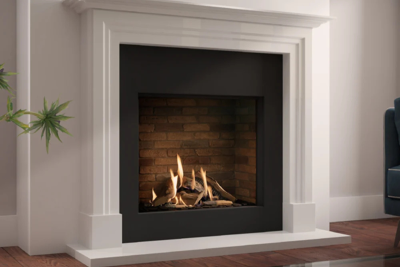
- Gas fires: Modern glass-fronted gas fires offer high heat output with total control over your fuel consumption.
- Electric fires: Perfect for modern, well-insulated homes. You only pay for exactly the heat you use, with zero heat lost up a chimney.
- Wood-burning & multi-fuel stoves: A stove uses a fraction of the wood an open fire uses but outputs vastly more heat into the room without causing house-wide draughts.
👉 Not sure what the most efficient option is for your home?
Our complete guide breaks down the most efficient ways to heat your home — helping you choose the right solution for your space and budget.
If You Already Have an Open Fireplace

If you want to use an open fire anyway, you can’t make it highly efficient, but you can make it less inefficient.
These steps won’t turn an open fire into an efficient heating system, but they can help you get the best possible performance from it.
- Use properly seasoned wood: Wet wood creates smoke, not heat. Ensure your logs have a moisture content below 20%.
- Burn dense hardwoods: Oak or ash burns slower and hotter than softwoods like pine, giving you better value for money.
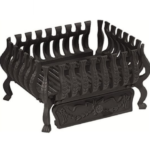
- Use a fire basket or grate: Elevating the fuel allows air to circulate underneath, creating a hotter, cleaner burn.
- Add a cast iron insert: A cast iron insert helps retain and radiate heat back into the room, improving the performance of your open fire compared to an exposed brick fireplace.
- Maintain the chimney: A swept chimney draws properly, reducing the risk of smoke entering the room and ensuring the fire burns as cleanly as possible.
👉 Want your open fire to actually perform better?
A solid fuel fire basket improves airflow, helping your fire burn hotter and more cleanly. For even better heat retention, cast iron inserts can help reflect heat back into the room. Browse solid fuel fire baskets and grates or explore cast iron inserts.
Is It Worth Opening Up an Old Fireplace?
If you have a boarded-up fireplace, opening it up is a fantastic idea for aesthetics and occasional use. A crackling open fire at Christmas or on a chilly Sunday evening provides classic, nostalgic ambience.
However, if your goal is to find a secondary heating solution to save money on your winter bills, opening an old fireplace for an open fire is not worth the investment. You would be much better off using that opening to install a high-efficiency gas fire.
💡 Worth knowing: If your fireplace is currently boarded up, you may not need to open it at all. Many modern gas and electric fires are designed to fit existing spaces or work without a chimney — offering a quicker, more efficient upgrade.
Open Fireplaces vs Modern Alternatives

Ultimately, an open fireplace is a feature for atmosphere, not a practical heating solution. While they offer beautiful sights, sounds, and smells, they are a drain on your home’s thermal efficiency. Modern alternatives like high-efficiency gas fires give you the visual appeal of a real flame but actually trap the heat inside your home where it belongs.
👉 Thinking about making the switch to a more efficient heating option? Explore our range of high-efficiency gas fires.
Open Fireplace FAQs
Do chimney balloons save money when the fire isn't lit?
Yes. An unused open chimney constantly draws warm air out of your home. Using a chimney balloon or sheep draught excluder when the fire is unlit helps stop this heat loss and can reduce your heating bills.
Can I use an open fire in a UK Smoke Control Area?
Only with authorised smokeless fuels. Burning standard wood logs on an open fire in a Smoke Control Area is illegal and can result in fines.
Does an open fire add value to a property?
Aesthetically, a working fireplace is a desirable feature that can make a property more attractive to buyers. However, energy-conscious buyers increasingly prefer homes with efficient gas fires, electric fires, or wood-burning stoves over draughty open fires.
Are the maintenance costs of an open fire high?
Yes. Open fires produce more soot and creosote than efficient stoves, so you should budget for a professional chimney sweep at least once or twice a year. Poor maintenance also increases the risk of chimney fires.
The Bottom Line
Do open fires save money? No.
They lose most of their heat up the chimney and can create draughts that actively cool your home. While they are great for occasional use, they should never be relied upon to reduce your winter heating bills.
For most homes, an open fire should be treated as a feature — not a heating strategy.
If you want to genuinely lower your heating bills while enjoying a beautiful flame, it’s time to upgrade.
If you’re looking for a fire that delivers both warmth and efficiency, explore high-efficiency gas fires or realistic electric fires and fireplaces.
Looking for more information? You might also like:
- 👉 What’s the most efficient way to heat your home?
- 👉 How to improve open fire efficiency and heat output
- 👉 Guide to converting an open fire to a gas fire
- 👉 Find the right gas fire type for your home
- 👉 Gas fires vs central heating – which should you use?
- 👉 Gas vs electric fire comparison
- 👉 Electric fire buying guide
- 👉 Guide to the most realistic electric fires
Need advice or want to compare options in person?
- 📍 Visit us: Browse a huge selection of gas fires, electric fires and wood-burning stoves at our showrooms.
- 📧 Contact us: Want advice tailored to your home? Contact our expert team.
↑ Back to top | Jump to sections ↑
