
















Categories
What's the Most Efficient Way to Heat Your Home? (And Why It Depends on How You Heat It)
⏱️ Time to read:
10–16 minutes
For years, the standard advice for lowering heating bills was simple: buy the appliance with the highest efficiency percentage. But with volatile energy costs and changing home habits, that advice is outdated.
Today, a 100% efficient heater isn’t automatically the cheapest to run. True heating efficiency isn’t just what happens inside the appliance — it’s a balance of efficiency, fuel cost, heat output, and how you use your rooms.
If you’re tired of conflicting advice and just want to heat your home without wasting money, this guide will help you make the right choice.
🧠 Quick Answer: What is the most efficient way to heat a home?
There is no single “most efficient” heating method. It depends on your fuel costs and daily habits.
- High-efficiency gas fires offer the best balance of low running costs and strong heat output for everyday use.
- While electric fires are 100% efficient at the point of use, electricity costs significantly more per kWh than gas, making them more expensive to run for long periods.
Ultimately, the biggest factor in reducing bills is zonal heating — using a secondary heat source to warm only the room you are in, rather than running the central heating for the entire house.
In most UK homes, the most efficient approach is heating the room you use with a cost-effective fuel source like gas.
🔑 Key Takeaways
- Efficiency percentages are misleading: A 100% efficient electric fire will often cost more to run than an 85% efficient gas fire due to the higher price of electricity.
- Fuel cost per kWh matters most: Compare the cost of the energy source, not just the appliance rating.
- Heating one room is more efficient: Using a dedicated heat source in your main living space is often cheaper than heating the entire home.
- Gas fires are the cost-effective workhorse: For everyday heating, modern glass-fronted fires offer the best return on investment.
- Open fires are the least efficient choice: Traditional open solid fuel fires lose the majority of their heat up the chimney.
📍 Jump to what matters
Short on time? Skip straight to what you need.
What “Efficient Heating” Actually Means
When people talk about efficient heating, they are usually confusing three very different things. To make the right choice, you need to understand how they interact.
Appliance Efficiency
This is the percentage of fuel converted into usable heat rather than lost, usually up a chimney. An electric fire converts 100% of its energy into heat. A modern gas fire might convert 80–85%. An open coal fire might only convert 20%, losing the rest as smoke and draughts.
Fuel Costs
Different fuels are measured and priced differently. Gas and electricity are billed in pence per kilowatt-hour (kWh), while solid fuels are bought by weight or volume. Currently, electricity is significantly more expensive per kWh than mains gas.
Usage Efficiency (Zonal Heating)
This is the core insight most homeowners miss. How you heat matters more than what you heat with.
If you spend most of your evening in the living room, running a 24kW central heating boiler to keep the whole house at 21ºC is incredibly inefficient. “Zonal heating” means turning your central heating down and using a single efficient fireplace to heat the room you are sitting in.
Why 100% Efficient Doesn’t Mean Cheapest

It is easy to look at an electric fire, see the “100% efficient” label, and assume it will slash your energy bills. Efficiency simply means no energy is lost during conversion.
If electricity costs around 24–25p per kWh, a 2kW electric fire costs roughly 50p per hour to run.
If gas costs around 5–6p per kWh, a 4kW gas fire operating at around 80% efficiency provides roughly double the heat for around 30p per hour.
The electric fire wastes no energy, but the gas fire is still cheaper to run and makes the room warmer.
Real Cost Comparison
Here’s how typical UK energy costs compare in real terms:
💡 Worth knowing: Energy prices fluctuate, but the ratio between gas and electricity generally remains consistent.
Cost per hour:
| Heating Method | Appliance Efficiency | Heat Output | Estimated Cost Per Hour |
|---|---|---|---|
| High-Efficiency Gas Fire | ~80–85% | High (3kW–5kW) | ~£0.20–£0.35 |
| Electric Fire | 100% | Moderate (1kW–2kW) | ~£0.45–£0.55 |
| Traditional Open Fire | ~20–30% | Low–Moderate | £0.80–£1.50+ |
Monthly Cost Example (3 Hours Per Day)
If you use your living room fire every evening from 6 pm to 9 pm over a 30-day month:
- Gas fire: Typically around £20–£35 per month for evening use
- Electric fire: Often £40–£50+ per month depending on usage
- Open fire: Can exceed £80+ per month due to fuel use and heat loss
Real-Life Scenario: Typical Living Room Use

The Scene: It’s 6 pm in mid-November. You’ve finished work, had dinner, and settled into the living room for the evening, TV remote in hand. Nobody else is at home.
Instead of leaving the central heating pumping hot water to heat empty bedrooms, you turn the thermostat down to 15ºC and turn on your living room fireplace.
- If you have a gas fire: You get consistent, roaring heat within minutes. The room stays incredibly warm, and because gas is cheaper per kWh, your evening costs very little. This is usually the most cost-effective scenario.
- If you have an electric fire: You get instant warmth and beautiful aesthetics. It costs more per hour than gas — but because you’ve turned the main boiler down, you are still saving money overall compared to heating the whole house.
- If you have an open fire: You get a wonderful atmosphere, but you are burning through expensive logs or coal rapidly. Worse, the chimney is sucking the residual central heating warmth out of the room, making the space near the door feel chilly.
👉 Want to compare your options in more detail? Read our guide to gas fires vs central heating — which should you use?
Central Heating vs Room Heating: What Actually Costs Less?
If you only use one room in the evening, heating your entire home is one of the biggest sources of wasted energy.
Here’s a simplified comparison for a typical UK setup:
| Heating Approach | What You’re Heating | Typical Evening Cost (3 hrs) | Monthly Cost (30 days) | Efficiency in Practice |
|---|---|---|---|---|
| Central Heating (whole house) | 6–8 rooms (most unused) | £2–£3.5+ | £60–£105+ | Low |
| Gas Fire (zonal heating) | 1 main living room | £0.60–£1 | £20–£35+ | High |
| Electric Fire (zonal heating) | 1 main living room | £1.50–£1.70 | £40–£50+ | Medium |
What this shows:
- Central heating is efficient at heating your whole home
- But inefficient when most of that space is empty
If you spend your evenings in one room, you could be paying 2–4x more than necessary.
In many homes, the biggest inefficiency isn’t the appliance — it’s heating space you’re not using.
💡 Worth knowing: Running your central heating at a lower background temperature (e.g. 15–17ºC) and using a dedicated heat source in your main room is one of the most effective ways to reduce overall heating costs.
Heating Options Breakdown

Gas Fires (The best all-rounder)
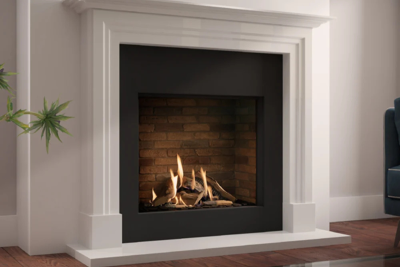
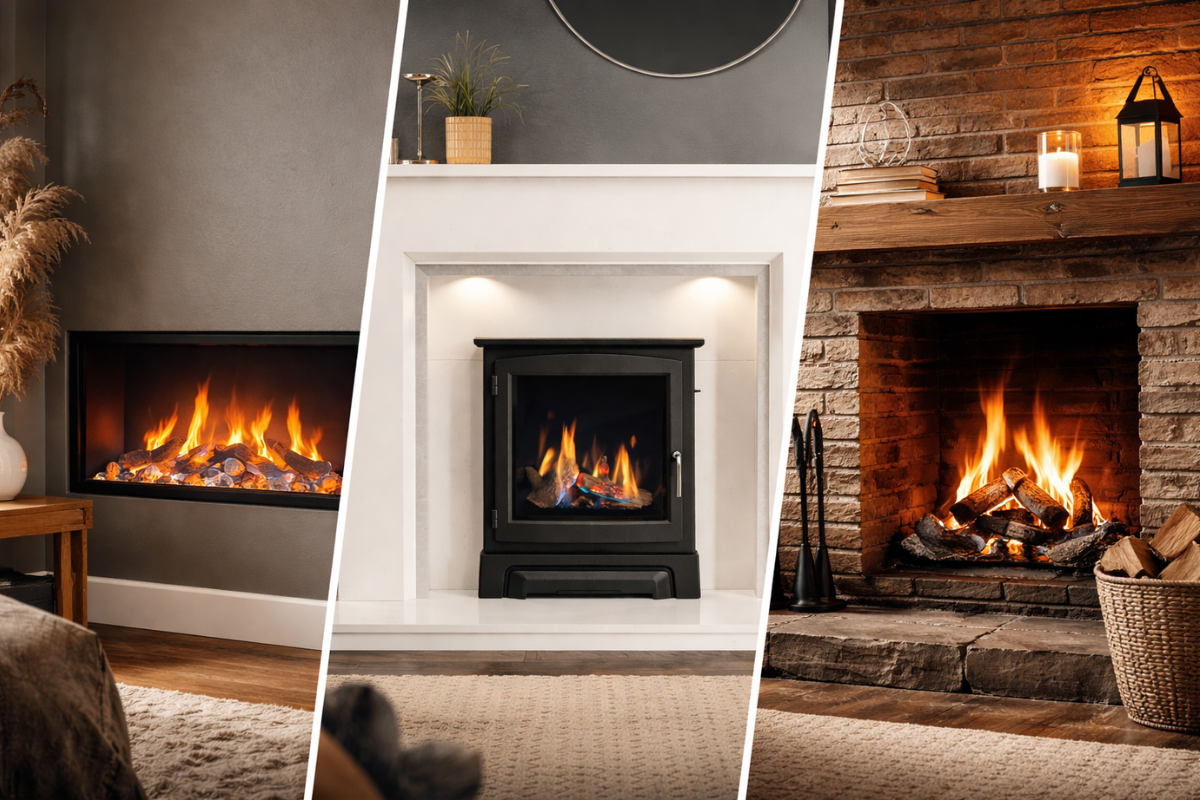
For homes on mains gas, a high-efficiency gas fire is often the smartest investment. Modern glass-fronted models prevent warm air from escaping up the chimney, resulting in efficiencies of over 80%. They offer high heat output, low running costs, and easy control.
💡 Worth knowing: Modern appliances outperform old ones. If you have a gas fire from the 1990s, upgrading to a newer high-efficiency model can drastically reduce your gas consumption.
Electric Fires (The flexible option)
Electric fires are ideal for homes without a chimney or gas supply. They are incredibly easy to install (often just plug-and-play) and allow you to enjoy flame effects without turning on the heat. While heat output is capped (usually around 2kW) and running costs are higher, their 100% point-of-use efficiency and easy installation make them a popular choice for modern media walls.
Solid Fuel / Open Fires (The least efficient)
While nothing beats the crackle of a real open fire, they prioritise atmosphere over efficiency. Up to 80% of the heat generated goes straight up the chimney. They are better seen as an atmospheric luxury than a practical, cost-effective heating solution.
In practical terms, an open fire often heats the chimney more than the room itself.
👉 Not ready to give up a real fire? A modern wood-burning stove offers the same ambience with far higher efficiency — explore your options at Direct Stoves.
Common Mistakes
- Choosing based on efficiency % alone: Ignoring the actual cost of the fuel.
- Ignoring fuel cost differences: Assuming electricity and gas cost the same per unit.
- Heating unused rooms: Leaving the central heating on high when you only occupy one room.
- Expecting open fires to heat efficiently: Relying on an open grate to warm a room, unaware of the massive heat loss up the flue.
💡 Worth knowing: Combination heating is best. The most efficient homes use a mix of a low-set central heating system and a high-efficiency secondary heat source (like a gas fire) in the main living area.
Frequently Asked Questions
Do bioethanol fires offer an efficient way to heat a room?
Yes, in terms of appliance efficiency, bioethanol fires are 100% efficient. Because they produce real flames without smoke or soot, they don’t require a chimney or flue, so no heat is lost externally.
However, bioethanol fuel is relatively expensive compared to mains gas. While they are highly efficient at the point of use and ideal for homes without a chimney, they are best suited to occasional, atmospheric heating rather than everyday use.
Are wood-burning stoves more efficient than open fires?
Yes — significantly.
A traditional open fire can lose up to 80% of its heat up the chimney, whereas modern Ecodesign wood-burning stoves typically operate at around 75–85% efficiency.
Because stoves use a closed combustion chamber, they control airflow and direct heat into the room rather than letting it escape.
How does home insulation impact the efficiency of my fireplace?
A fireplace can only heat a room efficiently if that heat stays inside.
Poor insulation, single-glazed windows, or draughty floors will quickly drain warmth from even the most efficient appliance. Before upgrading your heating, it’s worth improving draught-proofing — otherwise, you’re effectively paying to heat the outside.
How often should I service my gas fire to maintain its efficiency?
Your gas fire should be serviced once a year by a Gas Safe registered engineer.
Over time, debris or partially blocked burners can reduce heat output. A poorly maintained fire has to use more gas to produce the same level of warmth, increasing running costs.
Can I use a fireplace efficiently alongside an air source heat pump?
Yes — they work well together.
Air source heat pumps provide steady, low-level background heat across the home. A gas or electric fire can then be used to deliver a quick boost of warmth in the main living room during colder evenings.
This combination allows you to stay comfortable without pushing your heat pump harder than necessary.
Bottom Line
There is no single best heating system for every home. Real efficiency depends on the cost of your fuel, the type of appliance you use, and — most importantly — how you use it.
For most UK homes, room-based heating combined with a cost-aware choice of appliance gives the best results. Turn the thermostat down, shut the doors to empty rooms, and use a high-efficiency gas or electric fire to heat your main room.
Ready to lower your heating costs without sacrificing comfort?
👉 Browse our range of high-efficiency gas fires and modern electric fires.
Or, explore our comprehensive guides to help you make the right choice for your space:
Gas fire guides:
- 👉 Gas fire buying guide
- 👉 Balanced flue gas fire installation guide
- 👉 How long do gas fires last?
- 👉 Guide to gas fire maintenance and servicing
- 👉 How much does it cost to run a gas fire?
Electric fire guides:
- 👉 Is it time to replace your electric fire?
- 👉 Electric fire buying guide (all types)
- 👉 Electric fireplace suite buying guide
- 👉 Guide to planning a media wall with a fire
Need advice or want to compare models in person?
- 📍 Visit our showroom: Browse a range of gas and electric fires at our showrooms in Cheadle, Stockport and Bromsgrove.
- 📧 Get in touch: Contact our team for expert advice on finding the perfect balance of efficiency and style.
↑ Back to top | Jump to sections ↑
