















Categories
What Types of Fires Can You Use in a Media Wall?
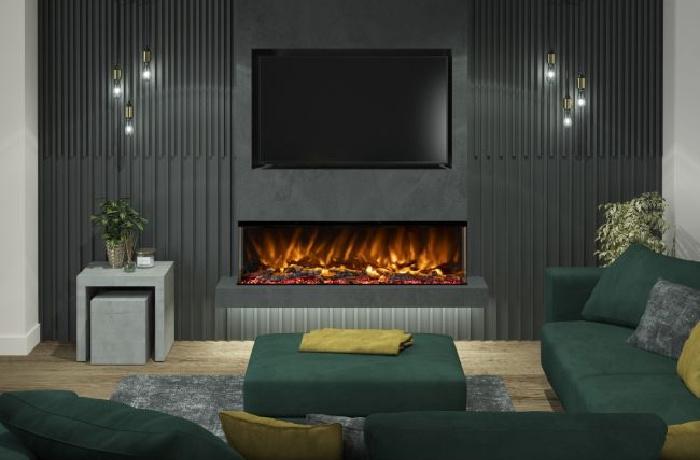
A modern media wall looks incredible – but only certain fire types are safe, practical, and regulation-friendly for this setup. This guide breaks down every fire option compatible with a media wall, how to choose the right one for your home, and the key installation factors.
What is a Media Wall & Why Fire Choice Matters
A media wall is a custom-built feature wall, typically constructed on a stud frame, designed to house a television, a fireplace, and other electronics such as soundbars and speakers. It creates a sleek, integrated focal point in a living room, hiding cables and providing a clean, contemporary finish.
However, fire compatibility is essential for a safe, successful installation. The choice of fire directly impacts the design and construction of your wall. Key considerations include:
- Heat Output: The fire must not produce excessive heat that could damage the TV or electronics mounted above it.
- TV Distance: Every fire has minimum clearance distances to combustible materials (including your TV), which must be strictly followed.
- Stud-Wall Depth: The fire’s depth determines the required depth of the stud wall, which in turn affects the room’s final dimensions.
Choosing from the best fires for media walls ensures your project is both beautiful and compliant. This guide covers the suitable media wall fires you can buy from Direct Fireplaces, helping you find safe TV wall fireplaces and inspiring your media wall ideas for 2026.
The Fire Types Suitable for Media Walls
We sell four fire categories that work perfectly in a media wall setting:
- Electric fires
- Conventional flue gas fires
- Balanced flue gas fires
- Bioethanol fires
Let’s explore each option in detail.
Electric Fires (Most Popular Choice)
Electric fires are by far the most popular and practical choice for media walls, and for good reason.
Why they’re ideal:
- No Chimney or Flue: They don’t require any venting, giving you complete freedom to install them anywhere.
- Safe Below a TV: Most electric fires have a front-facing heater or no heat at all, directing warmth into the room rather than upward. This makes them inherently safe for placement below a television with minimal clearance.
- Slim Designs: Many models feature slim profiles, making them ideal for standard-depth stud walls.
- High-Quality Flame Effects: Modern LED technology creates incredibly realistic flame effects that can be enjoyed with or without the heat, providing year-round ambience with low running hassle.
Good to Know:
- Recessed vs. Wall-Mounted: Recessed (also known as inset or hole-in-the-wall) electric fires are built into the wall for a seamless look, which is the standard for media walls. Wall-mounted options hang on the surface, which is less common for this type of integrated design.
- Heat Output Guidance: Most electric fires deliver 1-2kW of heat, providing supplemental warmth rather than serving as a primary heat source.
- Clearance Distances: Always check the manufacturer’s instructions, but clearances are often minimal, sometimes as little as 200mm above the fire.
- Why They Dominate: Their combination of safety, ease of installation, design flexibility, and stunning visuals makes them the default choice for most media wall installations.
Balanced Flue Gas Fires (Real Flame, No Chimney Needed)
For those who desire the authentic look and feel of real flames, a balanced flue gas fire is an excellent option.
Why they work:
- Sealed Combustion System: These fires are glass-fronted and completely sealed from the room. Air for combustion is drawn from outside through an outer pipe, and exhaust gases are expelled through an inner pipe. This makes them incredibly safe to install in a stud wall.
- Horizontal Flue: The concentric flue pipe can exit directly through an exterior wall, eliminating the need for a traditional chimney.
- Gorgeous Real Flames: They provide the undeniable beauty and higher heat output of a real gas flame with impressive energy efficiency.
Good to Know:
- Depth Requirements: Balanced flue fires are deeper than electric models, requiring a more substantial stud wall to accommodate the firebox and flue system.
- TV Clearance Considerations: Higher heat output means manufacturers’ specified clearances to the TV are critical and will be greater than those for electric fires. A non-combustible shelf or mantel is often required.
- Gas Safe Installation: By law, all gas fires must be installed and certified by a qualified Gas Safe registered engineer.
Conventional Flue Gas Fires (For Homes with Chimneys)
If your home has a traditional, fully operational brick chimney (Class 1) or a prefabricated flue (Class 2), a conventional gas fire can be integrated into a media wall.
Suitable only when:
- An Existing Working Chimney is Present: The media wall must be built on the chimney breast, allowing the fire to vent vertically.
- TV Clearances Can Be Met: These fires radiate significant heat upwards, so the distance to the TV is the most critical factor. A deep recess for the TV or a substantial, non-combustible mantelpiece is essential to deflect heat.
- Heat Deflectors or Mantels are Used: These are almost always necessary to protect the television from convective heat rising from the fire’s opening.
Good to Know:
- Differences vs Balanced Flue: A conventional flue is open-fronted and uses the air from the room for combustion, relying on a chimney’s natural draw to vent fumes. A balanced flue is a sealed system with its own dedicated twin-wall pipe.
- When Conventional Flue is Practical: This option is only practical if you are building your media wall on an existing chimney breast and are prepared to engineer a safe solution for the TV.
- Why Heat Direction Matters: The upward flow of hot air from an open-fronted fire makes TV placement challenging, but not impossible with careful planning and construction.
Bioethanol Fires
Bioethanol fires are a contemporary, eco-friendly option that provides real flames without any need for a chimney, flue, or even an electrical connection.
Why are they popular in slim media walls?
- Real Flames: They burn liquid bioethanol fuel, producing genuine, dancing flames that create a captivating atmosphere.
- No Chimney or Flue Required: The fuel burns cleanly, producing only a small amount of water vapour and carbon dioxide, similar to human breath. This means no venting is needed.
- Clean-Burning, Contemporary Aesthetic: Ideal for minimalist and modern designs, offering a sleek, vent-free look.
- Ideal When Heat Isn’t a Priority: While they produce some gentle warmth, they are primarily chosen for their design and ambient qualities.
Good to Know:
- Slimline Installation Advantages: Many bioethanol burners are very slim and can be installed in much shallower stud walls compared to gas fires.
- Flame Control & Fuel Considerations: Flame height can often be adjusted. The fuel needs to be refilled manually, and operating costs depend on the price of bioethanol.
Media Wall Fire Compatibility: Quick Comparison Table
| Fire Type | Works in a Media Wall? | Heat Output | Needs Flue/Chimney? | TV Safe? | Best For |
| Electric Fires | ✔️ Excellent | Low-medium | No | ✔️ Yes | Most homes; easiest installation |
| Balanced Flue Gas Fire | ✔️ With clearances | Medium-high | Yes (balanced flue) | ✔️ Usually | High-efficiency, real flame |
| Conventional Flue Gas Fires | ⚠️ Sometimes | Medium | Yes (fan-assisted flue) | ⚠️ Depends on clearances | Homes with chimneys |
| Bioethanol Fires | ✔️ Great | Low | No | ✔️ Yes | Slim walls and design-led installs |
How to Choose the Right Fire for Your Media Wall
Factor 1 – Heat Output and TV Safety
The primary concern is preventing heat damage to your television. Electric fires with a 1-2kW output are the safest, as the heat is usually directed forward. For gas fires, which have a higher kW range, adhering to the manufacturer’s minimum clearance distances is non-negotiable. Heat deflectors, a non-combustible mantel shelf, or a deeper recess for the TV can provide additional protection by redirecting hot air away from the electronics.
Factor 2 – Installation Requirements
Your choice of fire dictates the wall's construction.
- Depth: Electric and bioethanol fires can typically be fitted into stud walls 250mm deep. Gas fires - particularly balanced flue models - require a deeper cavity to house the appliance and flue.
- Wiring & Cables: Plan routes for power cables, HDMI leads, and speaker wires within the stud frame. Use dedicated cable channels to keep them tidy and accessible.
- Flue Exits: For gas fires, the media wall must be on an external wall (balanced flue) or on a chimney breast (conventional flue).
Factor 3 – Room Size & Heat Expectations
Consider what you want from your fire. If you need a significant heat source for a large room, a high-efficiency balanced flue gas fire is a strong contender. If your primary goal is ambience and you have a reliable central heating system, an electric or bioethanol fire is perfect. They provide a beautiful focal point and a gentle boost of warmth without overheating the space.
Factor 4 – Cost & Complexity
- Electric: Generally, the easiest and most cost-effective option. Installation can often be a DIY job for a competent individual or a straightforward task for a joiner/builder.
- Gas: The appliance is more expensive, and installation requires a Gas Safe engineer, which adds to the overall cost. The construction of the stud wall is also more complex.
- Bioethanol: The cost of the fire sits in the mid-range. Installation is relatively simple as no flue or power is needed, but the ongoing cost of fuel should be factored in.
Step-by-Step: How to Build a Media Wall Around a Fireplace
- Measure & Plan: Measure your wall and create a detailed layout plan for your TV, fire, and any shelving or soundbar cutouts.
- Choose Your Fire: Select the fire that best suits your needs, budget, and installation constraints.
- Plan Stud Wall Thickness: Based on your chosen fire depth and cable management requirements, determine the final stud wall thickness (typically 250-400mm).
- Add Wiring Routes: Construct the timber or metal stud frame, incorporating wiring routes and channels for all required wiring.
- Build Recess Frames: Construct the openings (recesses) for the television and fireplace to precise dimensions.
- Install Fire with Clearances: Install the fire, ensuring all manufacturer-specified clearances to combustible materials (such as the timber frame and plasterboard) are strictly adhered to.
- Plaster/Board the Wall: Clad the frame with fire-rated plasterboard, then plaster and skim for a smooth finish.
- Add Finishing Touches: Paint the wall and install your TV, soundbar, LED strip lighting, and any decorative shelving.
Learn More: Step by Step Guide to Building a Media Wall With a Fireplace
Modern Media Wall Design Ideas
- TV Above a Long Electric Fire: The classic and most popular layout, featuring a panoramic landscape electric fire beneath a large-screen TV.
- Side-by-Side Layouts: An asymmetrical design where the fire and TV are placed next to each other, often with one being slightly offset or at a different height.
- Floating Hearths: A small, raised hearth beneath the fire adds depth and a decorative element without taking up floor space.
- Built-in Shelving with Accent LEDs: Integrate illuminated alcoves or shelves into the design for displaying ornaments, books, or photos.
- Slimline Minimalistic Walls: Use a bioethanol or slim electric fire to create an ultra-thin feature wall that barely protrudes into the room.
Read More: Media Wall Layout Ideas for Living Rooms: Design Inspiration for Every Space
FAQs
Q: Can you put a TV above an electric fire in a media wall?
A: Yes – almost all electric fires are designed for safe placement below a TV. Their heaters are typically front-vented, directing heat into the room rather than upward, and they have very low clearance requirements.
Q: Can I install a gas fire in a media wall?
A: Yes, as long as the manufacturer’s clearance distances to the TV and combustible materials are strictly met and a Gas Safe Engineer correctly installs the required flue system (balanced, conventional, etc).
Q: Do media walls work without a chimney?
A: Absolutely. Electric, balanced flue, and bioethanol fire options all work without a traditional chimney, giving you incredible flexibility.
Q: What depth does my wall need for a recessed fire?
A: This depends entirely on the model. Slimline electric fires may fit in a 250mm-deep wall, while deeper gas fires may require 400mm or more. Always check the appliance’s installation manual.
Q: Are media walls expensive to run?
A: Running costs vary by fire type. Electric fires cost the same to run per hour as any other electric heater of the same power. Gas costs vary with usage and your tariff. Bioethanol is primarily for ambience, and its cost depends on fuel prices.
Q: What’s the safest fire type for a media wall?
A: Electric fires are considered the safest option due to their low, forward-directed heat output and minimal clearance requirements, making them inherently compatible with televisions.
Q: Can I install a media wall fire myself?
A: For most electric fires, a competent DIYer can often handle the installation. For any gas fire, it is a legal requirement in the UK that a Gas Safe-registered engineer carry out the installation.
Q: Do bioethanol fires actually heat a room?
A: They give off gentle warmth, enough to take the chill off a small-to-medium-sized room. However, they are not designed to be a primary heat source.
Q: Will a media wall increase my home’s resale appeal?
A: Usually yes. A well-designed, professionally installed media wall is a highly desirable modern feature that can serve as a striking focal point, adding value and appeal to potential buyers.
Final Checklist Before You Buy
- Do you want real flames or realistic electric flame effects?
- Do you have an existing chimney, or do you need a fire that works without one?
- Does your chosen fire’s depth fit within your planned stud wall?
- Have you accounted for the necessary clearance distances between the fire and your TV?
- Is your main priority powerful heating or decorative ambience?
- Are you budgeting for the professional installation costs (e.g. Gas Safe engineer) as well as the fire itself?
Ready to Create Your Dream Media Wall?
Browse the range of media wall fires available from Direct Fireplaces today and find the perfect fit for your project. We can also arrange an end-to-end installation service – see our installation page for more details.