
















Categories
Tips for Arranging Your Furniture Around Your TV and Fireplace
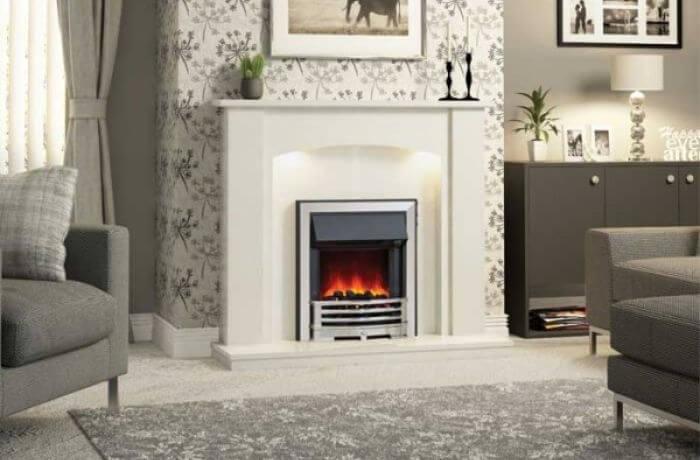
Quick Summary: The Golden Rules of Layout
- The Focal Point Rule: If you watch TV daily, the screen must be the primary focal point. If the room is for hosting, centre furniture around the fireplace. For the best of both worlds, stack them (TV above fire) or place them side-by-side.
- Ideal Viewing Distance: Place seating 6-9 feet from a 55-65” TV, and keep a 2-3 foot safety zone between furniture and the fireplace.
- Small Room Hack: Mount the TV above an electric fire or use a corner arrangement to maximise floor space.
- Open Plan Strategy: Use an L-shaped sofa or a large rug to create a ‘floating’ zone that defines the living area without blocking walkways.
The Modern Living Room Problem

If you spend long periods relaxing in your living room, you’ve likely encountered the ultimate interior design conflict: the battle between the screen and the flame.
In the past, the fireplace was the undisputed king of the living room. Today, with the rise of streaming and gaming, the TV demands equal – if not more – attention. This often leaves homeowners confused. Do you point the sofa at the fire? At the TV? Or do you try to awkwardly angle your neck to see both?
With the increase in popularity of media walls and sleek electric fireplace suites, the rules have changed. Whether you are working with a compact Victorian terrace or a sprawling open-plan new build, you don’t need an interior designer to solve this.
This guide provides practical, no-fluff layouts to help you arrange your furniture for comfort, style, and safety.
Decide the Room’s Focal Point First (This is Non-Negotiable)

Before you move a single armchair, you must make a decision. What is the primary focal point of the room?
- TV as the Main Focal Point: If your family film nights are sacred, the furniture must face the screen. The fireplace becomes a secondary, atmospheric element.
- Fireplace as the Main Focal Point: If the room is for reading, conversation, and entertaining, the furniture should cluster around the hearth. The TV is secondary (perhaps hidden or placed to the side).
- Shared Focal Point (The Media Wall): The modern standard. By stacking or aligning the TV and fire, you create a single visual destination.
- Key Takeaway: In most modern homes, the TV becomes the primary focal point for daily use, with the fireplace acting as a visual anchor and source of ambience rather than the sole centre of seating.
Popular Layout Options (With Clear Pros & Cons)

1. TV Above the Fireplace
This is the most controversial layout, but often the most practical. By mounting the TV above the fire, you save floor space and create a unified column of interest.
- When it works: Ideal for smaller rooms where wall space is premium.
- Ideal fire types: Electric fires and media wall electric fires are best here, as they emit less heat near the screen than gas fires.
- The ‘Neck Strain’ rule: Ensure your TV isn’t mounted too high. If you have a high mantel, this layout might be uncomfortable unless you have a reclining sofa. Ideally, furniture should be placed 6-9 feet away from a 55-65” TV. The less space between the TV and furniture, the lower it should be mounted.
2. Side-by-Side TV and Fireplace
If you have a chimney breast with alcoves on either side, this is a classic solution. Placing the TV in the nook next to the fireplace allows you to enjoy both without stacking them.
- Balance is key: If the TV is on the left, balance the right side with shelving, art, or a log store to maintain symmetry.
- Furniture placement: You can place your sofa directly opposite both appliances.
3. Corner Fireplace with Wall-Mounted TV
If your fireplace is stuck in a corner (common in older builds) but your TV is on a flat wall, you need an angled approach.
- The Strategy: Orient the sofa toward the TV (the daily driver), but place an accent armchair angled toward the fireplace. This bridges the gap between the two zones.
4. Separate Zones in Open-Plan Rooms
If you are lucky enough to have a large, long, or L-shaped room, you don’t need to force the TV and Fireplace together.
- Zoning: Create a ‘watch zone’ with a sectional sofa around the TV, and a separate ‘quiet zone’ with accent chairs in front of the fireplace.
- Visual Flow: Use rugs to define these separate areas so the furniture doesn’t look like it’s floating aimlessly.
Sofa & Seating Placement Rules That Actually Work

Once you have chosen your layout, where exactly does the sofa go?
- The Floating Sofa: In large square rooms, avoid pushing all furniture against the walls. Pull the sofa into the centre of the room. This makes the room feel cosier and creates a walkway behind the seating.
- The ‘L’ Shape: An L-shaped sofa is fantastic for defining a corner in an open-plan space. It naturally creates a boundary between the ‘living’ area and the dining or kitchen area.
- Armchairs: These are your secret weapon. Swivel accent chairs are particularly useful – they allow you to turn toward the TV for a show and then swivel back to the fire for conversation.
Quick Rule: Your seating should face the TV naturally, with the fireplace positioned within peripheral view rather than forcing awkward angles.
Coffee Tables, Rugs & Flow
The space between the furniture is just as important as the furniture itself.
- Walkways: Ensure you have at least 30 inches (approx. 75cm) of walking space around your furniture. You shouldn’t have to shuffle sideways to get out of the room.
- Rug Sizing: A rug anchors the zone. Ideally, the front legs of your sofa and armchairs should sit on the rug. This visually ties the TV and fireplace arrangement together.
- Table Shapes: If you have a smaller space, opt for a round coffee table or ottoman. As we’ve noted in previous guides, rounded pieces flatter small spaces and reduce knee-knocking hazards.
Media Walls: Furniture Planning Tips
If you are installing a media wall electric fire, your furniture planning needs to account for the build.
- Depth Matters: Media walls often protrude into the room (to house the TV and fire depth). Ensure your sofa is pushed back far enough to compensate for this lost floor space.
- Cable Management: The beauty of a media wall is the lack of clutter. Ensure your furniture layout doesn’t block access to any integrated storage or control panels.
- Symmetry: Because media walls are often perfectly symmetrical, your furniture looks best when it mirrors this. A centred sofa with matching side tables works beautifully here.
Fireplace Safety & Practical Considerations
Safety is paramount, especially regarding heat.
- Distance: We recommend a minimum distance of 2-3 feet between the fireplace and any furniture. Too close, and the heat can damage leather or warp wood (and make you uncomfortable).
- Electronics: If mounting a TV above a gas or solid fuel fire, you must check the manufacturer’s clearance guidelines. Heat rises can damage screen pixels. This is why electric fires are the preferred choice for TV-above-fire layouts.
- Airflow: Never block a fireplace's ventilation with a coffee table or ottoman.
Small Living Rooms: What to Do When Space is Tight
Small rooms require smarter choices, not just fewer items.
- Wall-Mount Everything: Get the TV on the wall. Get the fireplace into the wall (inset or hole-in-the-wall designs). This frees up precious floor square footage.
- Scale Down: Avoid ‘chunk’ rolled arm sofas. Look for slimline furniture with exposed legs, which allows light to flow under the seat, making the room feel larger.
- Mirrors: Hanging a mirror over the fireplace (if the TV is elsewhere) or on an adjacent wall can double the visual depth of the room.
Common Layout Mistakes to Avoid
- The ‘Waiting Room’ Effect: Pushing all furniture flat against the walls. It makes the room feel cold and uninviting.
- TV Too High: Mounting the TV near the ceiling to clear a tall mantelpiece. If you have to look up, it’s too high. Consider a lower fireplace surround or a specialised drop-down mount.
- Blocking Natural Light: Avoid placing the back of a high sofa directly in front of a window. It blocks light and makes the fireplace feel dominating and gloomy.
- Ignoring Traffic: Don’t place a coffee table in the direct line of travel between the door and the seating.
Quick Layout Examples
- Best for Small Rooms: TV mounted above a sleek electric fire; slim sofa on the opposite wall.
- Best for Open-Plan: Floating L-shaped sofa facing a media wall; dining table behind the sofa.
- Best for Wide Rooms: Fireplace centred; TV in the alcove; sofa facing the gap between them.
- Best for Socialising: Two sofas facing each other (perpendicular to the fireplace), with the TV hidden or on a side wall.
Frequently Asked Questions (FAQ)
Should the TV always go above the fireplace?
Not always. While it saves space, it can cause neck strain if the fireplace is tall. It is best suited for electric fires where heat management is easier.
How far should a sofa be from a TV and fireplace?
For the fireplace, keep furniture at least 2-3 feet away for safety. For the TV, the distance depends on screen size, but generally 6 to 10 feet is comfortable for modern 55-to 65-inch screens.
Is it safe to put furniture near a fireplace?
You must maintain a ‘safety zone’. For both gas and solid fuels, sparks and intense heat pose risks. For electric fires, the risk is lower, but blocking the heater vents can cause overheating. Always check your manual.
Can you have a media wall in a small living room?
Yes. Look for ‘slimline’ electric fires and build a shallow stud wall. This creates a focal point without eating up too much floor space.
What is the best fireplace type for a media wall?
Electric fires are the industry standard for media walls. They offer realistic flame effects, zero emissions, and heater settings that can be turned off while the flames stay on – perfect for protecting your TV.
How do I stop my living room from feeling unbalanced?
If your TV and fireplace are side-by-side, use shelving, plants, or artwork on the ‘lighter’ side of the wall to visually balance it so it matches the ‘heavy’ side, which contains the appliances.
Does a TV above a fireplace damage the screen?
It can, if not done correctly. Gas and solid fuel fires generate significant rising heat that can melt plastic casings or damage pixels over time. If you are using a gas fire, you will likely need a deflector shelf or a deep mantel to divert heat away from the screen. Electric fires are generally much safer for this setup.
How high should I mount the TV if it’s above the fireplace?
Ideally, the bottom of the TV should be as close to the mantel as safely possible to keep the viewing angle low. A good rule of thumb is to have the centre of the screen at eye level when seated, but this is rarely possible above a fire. To mitigate neck strain, consider a tilt mount that angles the screen down toward the sofa.
What if my room is long and narrow?
In a long rectangular room, avoid placing the TV and fireplace at opposite narrow ends, as this creates a ‘tennis court’ effect where you have to constantly turn your head. Instead, place them on the same long wall (side-by-side or stacked) or place the fireplace on the long wall and the TV in a corner. This keeps the seating area central and intimate.
Can I put a TV opposite a fireplace?
You can, but be careful of glare. If the fire is opposite the TV, the light from the flames (or the reflection of the fireplace surround) might appear on your screen, ruining the picture quality. If you choose this layout, consider an anti-glare TV screen.
I have an open-plan room; how do I define the ‘living’ area?
Use your furniture as walls. An L-shaped sofa or sofa with a console table behind it acts as a physical barrier that says ‘the living room starts here’. A large area rug is also essential – all the core seating furniture (sofa and chairs) should have at least their front legs resting on the rug to tie the zone together.
What do I do with the alcoves if the TV is above the fire?
If you have moved the TV from the alcove to above the fire, you now have two empty spaces. These are perfect for built-in cabinetry (to hide TV boxes and consoles) with shelving above for books and décor. This adds symmetry and storage, keeping the main focal point clutter-free.
Conclusion: Design for How You Actually Live
There is no single ‘right’ way to arrange your living room. The best layout is the one that fits your lifestyle. If you binge-watch series every night, prioritise the TV. If you host wine nights, prioritise the hearth.
Don’t be afraid to experiment. Move the sofa, angle the chairs, and see how the room feels.
Ready to transform your living room?
- Explore our range of Media Wall Electric Fires for the ultimate modern layout.
- Check out our Fireplace Surrounds to frame your new focal point.
- Find the perfect Wall-Mounted Electric Fire for a small living room.