



















Categories
Which Gas Fire Type is Right for You? (Complete UK Guide)
⏱️ Time to read:
10–16 minutes
Key Takeaways: Quick Answers for Your Home
- No chimney? → You need a balanced flue gas fire or a flueless gas fire.
- Want maximum heat efficiency? → A glass-fronted high-efficiency gas fire is your best option.
- Want a traditional look? → An open front gas fire provides the most authentic real-flame experience.
- Replacing an old gas fire? → Upgrading to a modern high-efficiency model can drastically reduce your running costs.
Stop Guessing – Find the Exact Gas Fire You Need
Often, the biggest mistake homeowners make is choosing a gas fire based purely on appearance. Efficiency, flue type, and installation constraints have a far bigger impact on long-term performance and running costs. In UK homes, the right gas fire is determined more by ventilation and flue setup than by style alone.
This guide cuts through the fluff. Whether you are looking to replace an old gas fire, fit a luxury modern gas fire, or find a solution for a home without a chimney, we will show you exactly which type of fire fits your setup.
Do I Need a Chimney for a Gas Fire? (Quick Answer)
No, you do not need a chimney for a gas fire. Flueless and balanced flue gas fires are designed to operate without a chimney, using either an external wall flue or room ventilation instead.
The 4 Main Types of Gas Fire (Explained Simply)
To make the right choice, you first need to understand the four primary categories of gas fires available in the UK.
Gas fire types explained (quick version)
- Open front gas fire: A traditional fire that vents via a chimney but loses heat
- Glass front gas fire: Sealed unit that improves efficiency by keeping heat in
- Balanced flue gas fire: Chimney-free fire that vents through an external wall
- Flueless gas fire: 100% efficient fire using a catalytic converter and room ventilation
Open front gas fires (radiant gas fires)
What is an open front gas fire?
An open front gas fire is a traditional-style gas fire that is open to the room and uses a chimney to vent gases. This design creates a natural, unobstructed flame effect, similar to a real coal or wood fire.
Who is an open front gas fire best for?
Open front gas fires are best suited to period homes or to anyone prioritising a classic fireplace look. They are ideal if appearance matters more than efficiency, but they are less suitable for those looking to maximise heat output or reduce running costs.
Quick facts:
- Best suited to: Traditional fireplaces, period homes, aesthetic-first buyers
- Common features: Often feature realistic gas fire coals
- Example: The Crystal Fires Super Radiant Gas Fire offers a classic open-flame look
Glass front gas fires (high efficiency)
What is a glass front gas fire?
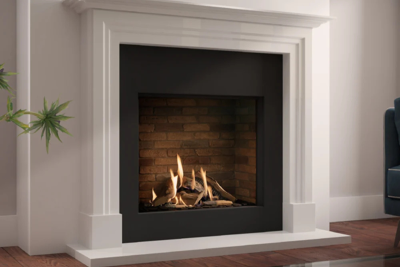
A glass front gas fire has a sealed glass panel across the front of the fire. This prevents warm air from being drawn up the chimney and directs more heat back into the room, improving overall efficiency.
Who is a glass front gas fire best for?
Glass-fronted gas fires are ideal for homeowners with a chimney who want high heat output without sacrificing style. They suit modern interiors and are a good choice if you want an efficient, practical heating solution that still looks sleek and contemporary.
Quick facts:
- Best suited to: Modern homes, efficiency-focused buyers, strong heat output
- Common features: Sealed glass front, higher efficiency ratings, contemporary trims
- Example: The Elgin & Hall Calleos 22-Inch High Efficiency Inset Gas Fire is a great example of a glass-fronted, high-output model
Balanced flue gas fires (no chimney needed)
What is a balanced flue gas fire?
A balanced flue gas fire is a fully sealed heating appliance that draws fresh air from outside and expels waste gases through a twin-wall flue installed on an external wall. Because it operates as a closed system, it does not require a traditional chimney.
Who is a balanced flue gas fire best for?
Balanced flue gas fires are ideal for homes without a chimney, including modern properties and new builds. They are a strong choice if you want high efficiency, consistent heat output, and a clean, built-in look without relying on an existing flue system.
Quick facts:
- Best suited to: Homes without chimneys, new builds, efficiency-focused buyers
- Common features: Sealed system, external wall flue, high efficiency ratings
- Example: The Burley Farndon Inset Balanced Flue Gas Fire or the Gazco Logic Vogue Balanced Flue Inset Gas Fire
Flueless gas fires (100% efficient)
What is a flueless gas fire?
A flueless gas fire is a heating appliance that operates without a chimney or external flue. Instead, it uses a built-in catalytic converter to clean the combustion gases before safely releasing them back into the room.
Who is a flueless gas fire best for?
Flueless gas fires are ideal for homes without a chimney, where installing a flue is impractical. They are best suited to buyers who want maximum efficiency and flexible placement, but they do require a suitable room size and a permanent air vent to meet safety regulations.
Quick facts:
- Best suited to: Internal walls, homes without chimneys, efficiency-focused buyers
- Common features: No flue required, catalytic converter, wall-mounted or inset designs
- Example: The EkoFires 5070 Wall Mounted Flueless Gas Fire or Burley Environ 4240 Flueless Gas Fire
Which gas fire type is best?
The best gas fire for your home depends on your setup and priorities:
- No chimney? Balanced flue or flueless.
- Best all-round option? Glass front.
- Best for traditional look? Open front.
Comparison Table: Pros vs Cons
| Feature | Open Front | Glass Front | Balanced Flue | Flueless |
| Average Efficiency | Low (≈40-60%) | High (≈70-85%) | Very high (≈80-90%+) | Maximum (100%) |
| Chimney Required | Yes | Usually | No (External wall needed) | No (Internal walls fine) |
| Heat Output | Low-Medium | High | High | Medium (Capped for safety) |
| Flame Realism | ⭐⭐⭐⭐⭐ | ⭐⭐⭐⭐⭐ | ⭐⭐⭐⭐ | ⭐⭐⭐⭐ |
| Running Costs | Higher | Lower | Lowest | Lowest |
| Pros | Real flame look, classic style | High efficiency, strong heat output | No chimney needed, very efficient | 100% efficient, highly flexible placement |
| Cons | Low efficiency, higher running costs | Slightly less “open flame” feel | Requires an external wall | Requires an air vent & minimum room size |
Chimney vs No Chimney (No-Nonsense Guide)
Quick answers to common questions
- Can you have a gas fire without a chimney? → Yes. Balanced flue and flueless gas fires are both suitable for homes without a traditional chimney.
- Are balanced flue gas fires efficient? → Yes. They are among the most efficient gas fires available, typically achieving 80–90%+ efficiency.
- Do flueless gas fires need ventilation? → Yes. They require a permanent air vent and a minimum room size to operate safely.
If you have a chimney
You have the most flexibility. You can choose between open front and glass front models. If you are installing a gas fire in an existing fireplace, your Gas Safe engineer will need to check the chimney’s condition. You may need a chimney sweep or a new flue liner to comply with gas fire chimney flue regulations.
If you don't have a chimney
Your main options are:
- Balanced flue gas fire: Installed against an external wall to vent outside.
- Flueless gas fire: Can be installed on almost any wall (including internal ones), provided the room meets the minimum cubic metre size requirements and has adequate gas fire ventilation (an air brick).
Decision Tree: Which Gas Fire Is Best for You?
- No chimney and an external wall? → Choose a balanced flue gas fire.
- No chimney and an internal wall? → Choose a flueless gas fire.
- Want maximum heat efficiency with a chimney? → Choose a glass front gas fire.
- Want a traditional look with raw flames? → Choose an open front gas fire.
Efficiency vs Aesthetics (Real Talk)
This is where you have to make a choice.
Gas fire myths (and the reality)
- Myth: Open gas fires heat a room brilliantly.
- Reality: While they feel warm up close, most of the heat is lost up the chimney. You are essentially heating the sky.
- Myth: You need a chimney for any gas fire.
- Reality: Balanced flue and flueless fires work perfectly without one.
Gas fire efficiency comparison (UK typical)
- Open front: ~40-60% efficiency
- Glass front: ~70-85% efficiency
- Balanced flue: ~80-90% efficiency
- Flueless: 100% efficiency
According to guidance from the Energy Saving Trust, improving heating efficiency is one of the most effective ways to reduce energy waste and lower household bills in the UK.
The blunt takeaway:
Want vibes? Get an open front. Want warmth? Get a glass front. Want logic and low bills? Get a balanced flue or flueless model.
What’s Best for YOUR Home Type?
Modern homes & new builds
If you want a sleek, contemporary look, hole-in-the-wall fires, balanced flue suites, or minimalist wall-mounted flueless fires are brilliant choices. They save floor space and create a stunning, clean focal point without making the room feel cluttered.
- Top pick: The Crystal Fires Manhattan. It’s a highly efficient, glass-fronted hole-in-the-wall fire that looks incredibly sharp, modern, and sits flush with your décor.
Traditional & period homes
If you live in an older property or simply love classic charm, you’ll want a fire that complements your home’s character rather than fighting against it. Traditional inset fires with realistic coal beds, or classic outset fires that sit on the hearth, are perfect for creating that cosy, nostalgic feel.
- Top pick: The Flavel Renoir. It delivers that comforting, traditional outset design but hides a highly efficient, modern heating engine inside. Classic inset models from Legend are also a fantastic choice for period fireplaces.
Flats/apartments
Because flats rarely have traditional chimneys and installing a twin-wall flue might be difficult, a flueless wall-mounted fire is usually your best option. Always check your building’s regulations regarding external venting and air bricks.
Running Costs & Installation
Typical gas fire running costs (UK)
Running costs depend on gas prices, your fire’s kW output, and its efficiency. However, higher-efficiency gas fires, such as glass front, balanced flue, and flueless models, provide significantly more usable heat per pound of fuel than open front models.
Cost vs efficiency (what most people get wrong)
A cheaper gas fire is not always cheaper to run. Lower-efficiency fires waste heat, meaning you pay more over time. High-efficiency gas fires deliver more usable heat per unit of gas, reducing long-term costs. The cheapest fire to run isn’t the one with the lowest price tag – it’s the one that keeps the heat in your room.
Gas fire installation: what actually matters
The type of gas fire you choose directly determines installation complexity. Balanced flue fires require an external wall; flueless fires require ventilation; and chimney-based fires may require a flue liner. Installation constraints often matter more than aesthetics, especially when it comes to flue type and ventilation requirements.
Gas fire installation cost UK
The cost of fitting a gas fire varies wildly depending on the complexity. A straight swap of an old gas fire might cost a few hundred pounds. However, if you are fitting a gas fire from scratch, requiring a new flue liner, core drilling for a balanced flue, or installing an air brick for a flueless fire, costs will be higher.
Always use a Gas Safe registered engineer to ensure your installation complies with UK safety regulations. They will ensure your setup meets all gas fire flue regulations and open gas fire safety standards.
- Do gas fires need ventilation? → Yes, all gas fires require ventilation. Open fires and high-output fires often require an air brick in the room. Balanced flue fires handle their own ventilation externally. Flueless fires have very strict minimum room size and air vent requirements to ensure the catalytic converter functions safely.
- Can you install a gas fire in an existing fireplace in the UK? → Yes, but it must be done by a professional to comply with current gas safety regulations. It may also require a chimney sweep and a new flue liner.
Gas fire safety essentials
- All gas fires must be installed by a qualified engineer
- Ventilation requirements vary by type
- Incorrect installation can lead to carbon monoxide risks
Final Recommendation
Choosing the right gas fire comes down to a simple formula:
- Check your chimney: No chimney? Browse our range of balanced flue gas fires or flueless inset gas fires.
- Decide your priority: Want the lowest heating bills? Choose a high-efficiency (glass front) model or a 100% efficient flueless model.
- Pick your style: From ultra-modern gas fires to traditional outset gas fires, match the trim and fuel bed to your interior design.
In simple terms:
- Open front = best for looks, worst for efficiency
- Glass front = best all-round option
- Balanced flue = best for no chimney homes
- Flueless = most efficient but requires ventilation
Ready to upgrade?
Browse our range of balanced flue gas fires, glass front gas fires, and flueless gas fires to find the best gas fire for your home.
Frequently Asked Questions
Can I buy replacement false coals for gas fires?
Yes, but you must be incredibly careful. Gas fire replacement coals must be specifically designed and manufacturer-approved for your exact make and model. Using generic gas fire coals or rocks can alter the way the gas burns, potentially producing lethal carbon monoxide.
What is the best modern gas fireplace in the UK?
The “best” depends on your needs, but brands like Gazco, Flavel, and Elgin & Hall consistently rank highly. For a luxury modern gas fire, look at large-format, glass-fronted models with realistic modern gas fireplace log sets.
How do I modernise an open gas fire?
To modernise an open gas fire, you can update the fret and trim (the metal framework around the fire) to a contemporary chrome or brushed steel finish. Alternatively, you can replace the entire unit with a high-efficiency glass-fronted model, which fits into the same standard 16-inch opening but looks much sleeker.
What are some good gas fire surround ideas?
For a modern gas fireplace makeover, pair a sleek inset fire with a micro-marble surround. For a traditional look, an outset gas fire pairs beautifully with a wooden surround and a granite hearth.
What is a radiant gas fire?
A radiant gas fire heats a room by emitting heat directly outwards from the ceramic radiants or coals, rather than using a fan to convect heat. They are often open-fronted and provide a very traditional, intense local heat.
Where can I find modern gas fires for sale?
You can browse our full range of gas fires at Direct Fireplaces, filtering by chimney type, heat output, and style to find the perfect match.