


















Categories
Gas or Electric Fires: Which is Best?
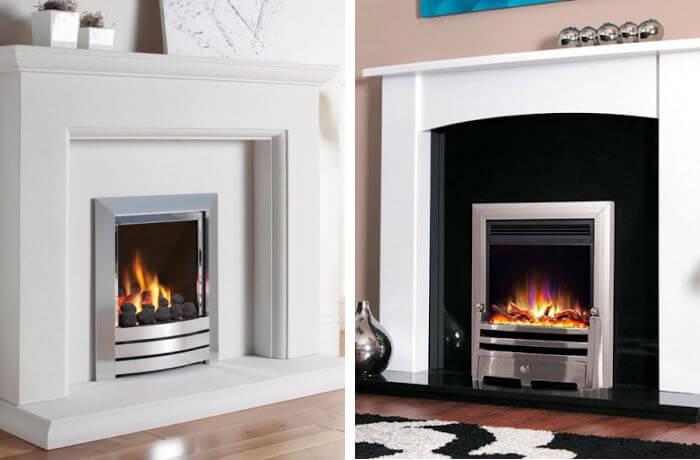
When you start looking for a new fireplace, you usually hit a fork in the road immediately. Do you stick with the traditional warmth of gas, or do you switch to the modern versatility of electric?
The real question isn’t simply ‘gas vs electric fire.’ It’s about which fuel type fits your lifestyle, your budget, and the physical constraints of your property.
We know it can be confusing. You have to weigh up installation hassles, running costs, flame realism, and environmental impact. And let’s be honest – there is no universal ‘best’ fire. A high-efficiency gas fire might be perfect for a draughty Victorian terrace, but a nightmare for a modern, airtight new-build flat.
In this 2026 guide, we’re cutting through the noise. We will compare costs, performance, installation requirements, and lifestyle fit to help you make the right decision.
The bottom line: The best fire depends on your home, your budget, and exactly how you plan to use it.
At-a-Glance Comparison Table: Gas vs Electric
If you are short on time, this table breaks down the key differences between a gas fire vs electric fire. This is the quickest way to see which technology aligns with your needs.
| Feature | Gas Fires | Electric Fires |
| Installation | Complex. Requires Gas Safe engineer. Needs chimney, flue, or air vent (flueless). | Simple. Usually plug-and-play or basic wiring. |
| Upfront Cost | Higher (unit + professional installation). | Lower (unit + minimal installation |
| Running Costs (UK) | Generally lower per hour (gas is cheaper per kWh). | Higher per hour (electricity costs more per kWh). |
| Heat Output | High (2.5kW – 6kW+). Powerful, radiant heat. | Moderate (1kW – 2kW). Supplemental heat. |
| Flame Realism | Excellent. Real flames, real movement. | Very Good. Modern LED/Holographic tech is convincing. |
| Maintenance | Annual service required by Gas Safe engineer. | Zero maintenance required (occasional dusting). |
| Suitability for Flats | Moderate. Flueless/Balanced Flue options exist but need permissions. | High. Perfect for flats, rentals, and media walls. |
| Environment | Fossil fuel usage. | Can be 100% green if using renewable tariffs. |
Gas Fires Explained
When people think of a ‘proper’ fire, they often think of gas. It bridges the gap between the work involved in running a wood burner, and the convenience of modern heating.
What is a Gas Fire?
A gas fire burns either mains gas (natural gas) or LPG (Liquid Petroleum Gas) to generate heat. They come in various styles:
- Chimney/Flue Models: These vent smoke up a traditional chimney or through an external wall (Balanced Flue).
- Flueless Gas Fires: These use a catalytic converter to clean the fumes, so they require no chimney or flue. Instead, they vent clean air back into the room (but require a dedicated air vent).
Pros of Gas Fires
- Powerful Heat: Gas fires pump out significant heat (often up to 6kW). They are fantastic for quickly warming a cold living room without turning on the central heating.
- 100% Efficiency (Flueless Only): Because flueless gas fires don’t lose heat up a chimney, 100% of the warmth stays in your room.
- Lower Running Costs: Historically and currently, the price of gas per kilowatt-hour (kWh) is significantly lower than that of electricity.
- Real Flame Appeal: You get actual combustion. The flames flicker and dance at random, something even the best digital screens struggle to replicate perfectly.
Cons of Gas Fires
- Installation Complexity: You cannot install this yourself. You legally must use a Gas Safe registered engineer.
- Ventilation Requirements: Even if you choose a flueless gas fire, you aren’t off the hook. You must install a dedicated air brick (vent) in the wall to supply fresh air, which can cause a draught for some people.
- Room Size Limits: Flueless fires have strict minimal room size requirements to ensure safety.
- Less Flexible: Once it’s in, it’s staying there. You can’t easily move a gas fire to another wall.
Best Homes for Gas Fires
- Houses with an existing gas supply.
- Homes with chimneys (for traditional models).
- Homes without chimneys but with adequate room size (for flueless models).
- People who want heat first, aesthetics second.
Electric Fires Explained
Electric fires have undergone a massive transformation in the last decade. Gone are the noisy fan heaters with orange ribbons; welcome to the era of modern electric fireplaces.
What is an Electric Fire?
An electric fire uses a heating element (usually a fan heater) to generate warmth, while LED or holographic technology creates the visual of a flame. Crucially, the heat and the flame effect operate independently.
Pros of Electric Fires
- Easiest Installation: If you have a plug socket, you can have a fire. There is no chimney, no flue, no gas pipe, and no air brick required.
- Design Flexibility: They are the king of the media wall. Because they don’t get scorching hot on the surround, you can safely mount TVs above them.
- Zero Maintenance: No annual servicing, no chimney sweeping, and no carbon monoxide risks.
- Ambience All Year: You can turn on the flame effect without the heat. This is perfect for summer evenings when you want the cosy glow but not the warmth.
Cons of Electric Fires
- Higher Running Costs: Electricity is more expensive per unit than gas. Using the heater at full power (2kW) for long periods will cost more than a comparable gas fire.
- Lower Heat Output: Capped at 2kW, they are designed to top up the heat in a room, not heat the whole house.
- Heat is Secondary: The primary focus of electric fires is the visual aesthetic, with heat being a secondary function.
Best Homes for Electric Fires
- New-build homes with high insulation (where gas heat might be too intense).
- Flats, apartments, and rental properties.
- Homes wanting a media wall installation.
- DIY enthusiasts who want to install the fire themselves.
Running Costs: Gas vs Electric Fires
This is the big question: gas fire running costs vs electric fire running costs.
To understand this, you need to look at the ‘Unit Price’ cap set by Ofgem. While prices fluctuate, the rule of thumb in the UK remains consistent: Gas is cheaper per unit (kWh) than electricity.
- Gas: Generally costs significantly less per kWh. A 4kW gas fire running on high might cost roughly 25p-35p per hour (depending on current rates).
- Electric: Electricity costs more per kWh. A 2kW electric fire running on full heat could cost roughly 50p-60p per hour.
However, context is key:
If you only use the electric fire for the flame effect (LEDs only, no heat), it costs pennies – less than boiling a kettle once. If you want a fire purely for looks, electric is cheaper. If you want a fire mainly for heavy-duty heating, gas is cheaper.
Installation & Regulations
Gas Fire Installation Rules in the UK
- Strictly Professional: It is illegal to install a gas fire yourself unless you are Gas Safe registered.
- Flueless Requirements: If you choose a flueless gas fire, you do not need a chimney, but you must have an air vent installed in the room to ensure a fresh oxygen supply. You also need to meet minimum room size dimensions.
- Chimney Checks: If using a traditional gas fire, your chimney must be swept and smoke-tested before installation.
Electric Fire Installation
- Plug and Play: Most freestanding and wall-mounted electric fires come with a standard 3-pin plug.
- Media Walls: While you can build the stud wall yourself, we recommend a qualified electrician to move the sockets or hardwire the fire so you don’t have trailing cables.
- Clearance: Even electric fires need some ventilation space for the heater intake/outlet, so never block the vents.
Design & Flame Realism
Are realistic electric fires finally as good as gas?
- Electric Tech: In 2026, we are seeing incredible depth effects, holographic smoke, and 3D LED logs. Brands like British Fires, Evonic, and Charlton & Jenrick have created electric visuals that are almost indistinguishable from the real thing at a glance.
- Gas Reality: However, gas fires still hold the crown for ‘organic’ movement. The way a real flame wraps around a ceramic log is random and hypnotic.
- The Verdict: If you want a sleek, wide, landscape fire under a TV, electric wins on design. If you want a traditional hearth with a deep glow, gas wins on realism.
Environmental & Efficiency Considerations
If you are looking for eco-friendly fires in the UK, the answer is nuanced.
- Gas Efficiency: Flueless gas fires are the efficiency kings, converting 100% of the gas into heat. Traditional glass-fronted gas fires are also very high (80%+). However, they do burn fossil fuels.
- Electric & Renewables: Electric fires are 100% efficient at the point of use. If your home is powered by a green energy tariff (wind/solar), an electric fire is a carbon-neutral heating option.
Which Should You Choose?
Still on the fence? Here is the decisive logic to help you choose.
Choose a Gas Fire if:
- You want a powerful heat source to warm a cold room.
- You want 100% heating efficiency (Flueless models).
- You prefer the look of random, organic, real flames.
- You own your home and plan to stay there for years.
Choose an Electric Fire if:
- You want a media wall or a modern landscape design.
- You cannot install an air vent (required for flueless gas) or a flue.
- You want the ambience of flames without the heat (summer use).
- You want a simple installation without building work.
Frequently Asked Questions (FAQ)
Here are the most common questions our customers ask about gas vs electric fireplaces.
Are gas fires cheaper to run than electric fires in the UK?
Yes, if you are using them for heat. Gas is cheaper per kilowatt-hour than electricity. However, if you only use the visual flame effect on an electric fire (without heat), electric is much cheaper.
Can I install a gas fire without a chimney?
Yes, absolutely. You have two options:
- Balanced Flue: Vents through an external wall.
- Flueless Gas Fire: Uses a catalytic converter to clean fumes. This requires no chimney and no external wall vent, but it does require an air brick for room ventilation.
Do electric fires actually heat a room?
Yes, but they are designed as ‘top-up’ heating. A 2kW electric fire will take the chill off a standard living room, but it won’t heat a large open-plan space as quickly as a central heating system or a large gas fire.
Are electric fires safe to leave on?
Modern electric fires are very safe and often include thermal cut-outs to prevent overheating. However, like all heaters, you should not leave them unattended for long periods or while sleeping.
Which fire is better for a media wall?
Electric fires are the standard for media walls. They allow you to recess a TV directly above the fire without the risk of heat damage to the screen.
Can renters install electric fires?
Yes. Freestanding electric fires or electric stoves are perfect for renters as they require no installation – just plug them in. You can take them with you when you move.
Do gas fires need servicing every year?
Yes. To ensure safety and efficiency, gas fires (especially flueless ones) should be serviced annually by a Gas Safe engineer. This checks for carbon monoxide safety and proper combustion.
Are electric fires expensive to use with today’s energy prices?
Using the 2kW heater setting can be costly if run for hours. However, using just the LED flame effect costs pennies per day.
Which is more realistic: gas or electric?
Gas fires are more realistic because they have actual flames. However, premium electric fires now use flame-effect technology that is incredibly convincing.
Are electric fires environmentally friendly?
They can be. If your electricity provider uses renewable sources (wind, solar), your electric fire is zero-carbon. Gas fires always burn fossil fuels.
Can you use an electric fire just for the flame effect?
Yes. This is a major advantage of electric fires. You can enjoy the cosy look in July without generating heat.
What’s the lifespan of a gas fire vs an electric fire?
Gas fires can last 15-20 years if maintained. Electric fires generally last 10-15 years, though LED components can last significantly longer.
Do electric fires add value to a home?
A well-installed media wall with a high-end electric fire is a desirable feature for modern buyers and can add appeal, if not direct monetary value.
Is a gas fire being phased out in the UK?
New build homes are moving away from gas connections (Future Homes Standard), but there is currently no ban on installing gas fires in existing homes with a gas supply.
What’s best for a living room vs bedroom?
Gas is often preferred for the main living room (high heat). Electric is often better for bedrooms (for ambience, lower heat, and safety).
Final Verdict: There’s No Winner – Only a Better Fit
If you take one thing away from this guide, let it be this: Don’t ask ‘which is better,’ ask ‘which fits my room?’
If you are renovating a draughty period property and crave deep warmth, gas (whether flueless or traditional) is your hero. If you are building a sleek media wall in a modern apartment, electric is the only logical choice.
Still Not Sure?
Browse our full range to see what catches your eye. Sometimes, the design makes the decision for you.
Browse All Gas Fires (Including Flueless)
Read: Media Wall Electric Fire Buying Guide
Read: What’s Included in a Balanced Flue Gas Fire Installation?