
















Categories
The Ultimate Media Wall Buying Guide
A media wall is a built feature wall that combines a fireplace — electric or gas — with a mounted TV, shelving and storage into one coordinated design. In short, if you’re renovating a living room and want the fire, TV and storage to look like they were designed together rather than bolted on separately over time, a media wall is very likely the answer. This guide covers everything from choosing the fire to planning the build itself.
View our full range of media wall fires here.
Why Media Walls Have Become So Popular
Traditionally, a TV above a fireplace and a scattering of shelving units either side felt like separate decisions made at separate times. A media wall solves that by designing the whole thing as one piece — fire, TV recess, shelving, storage and often lighting, built to consistent proportions and finished in a single material palette. It’s become one of the most requested living room renovations for exactly that reason: it transforms a room rather than just adding a fire to it.
Choosing the Fire for Your Media Wall
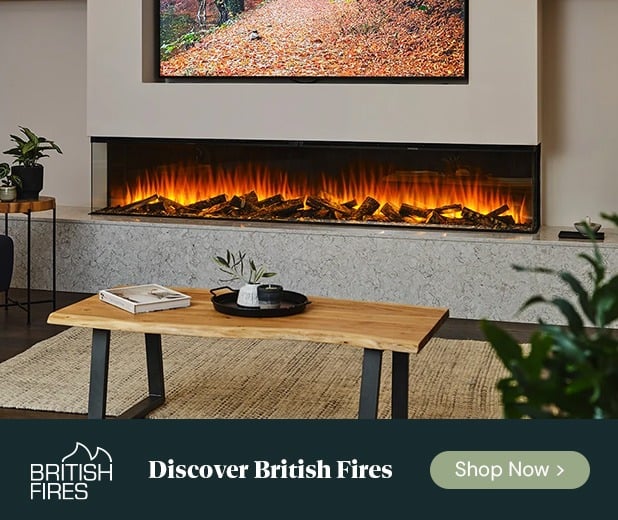
Electric fires are by far the most common choice for media walls, since they need no flue and can be positioned anywhere within the build without worrying about routing a chimney or balanced flue through the structure. This gives far more design freedom — the fire can sit centrally, off to one side, or even be a linear format spanning a wide section of the wall.
Gas fires can be incorporated into a media wall, but need careful planning around flue routing from the outset, since retrofitting a flue into a media wall after the structure is built is far more disruptive than planning it in from day one. If you want a genuine flame in your media wall, involve your installer at the design stage, not after.
One-Sided, Two-Sided or Three-Sided Fires
Media wall fires come in different viewing configurations — a single-sided fire viewed from the room, a two-sided (see-through) fire that can divide a room while remaining visible from both sides, or a three-sided fire offering an even wider viewing angle.
Planning TV Placement
Positioning the TV directly above the fire is the most common layout, but it’s worth thinking about seating distance and eye-line height before finalising the design — a TV mounted too high above a low seating arrangement can mean an uncomfortable viewing angle for regular use. Some media wall designs offset the TV to one side of the fire instead, or set it into a recessed alcove at a lower, more comfortable height.
Materials and Finishes
Media walls are typically built using a timber stud frame and finished with plasterboard, then dressed with materials like stone cladding, tongue-and-groove panelling, painted finishes, or a mix of textures to create visual interest. The finish is where a media wall really becomes a design feature rather than just a functional structure.
Built-In vs Modular Media Walls
A built-in media wall is constructed as a permanent structure specific to your room, offering full customisation but requiring more construction work. A modular media wall uses pre-built or semi-prefabricated units that are assembled on site, offering a faster, often lower-cost route to a similar look with less bespoke flexibility.
Planning the Cost
Media wall costs vary hugely depending on size, fire type, and finish complexity — a simple modular build with an electric fire sits at a very different price point to a bespoke, structurally complex build with a gas fire and premium stone cladding.
Planning Installation
Because a media wall is a construction project as much as a fireplace purchase, planning matters more here than with almost any other fireplace type — electrical points for the TV and fire, structural considerations for the frame, and (if going with gas) flue routing all need to be designed in from the start.
Frequently Asked Questions
Can I have a media wall without a fire at all? Yes, some people build a media wall purely for the TV and storage design without including a fire, though the fire is what most people associate with the format and typically what drives the “wow factor.”
Do media walls need planning permission? Generally no, as they’re internal, non-structural (or lightly structural) work, though any changes to electrics or gas require the appropriate certified tradesperson regardless of planning permission.
Can an existing chimney breast be used for a media wall? Yes, an existing chimney breast is often incorporated into or built around as part of the media wall design, particularly useful if you want to retain a gas connection.
How long does a media wall take to build? This varies with complexity, but a straightforward electric fire media wall build typically takes a few days, while more complex bespoke builds with structural changes or gas installation can take longer.