














Categories
Media Wall Electric Fires: How to Choose the Right Flame Effect for Your Room
⏱️ Time to read:
14–21 minutes
Everyone obsesses over size, heat output, and TV placement when planning a media wall.
But the thing you actually look at every day?
It’s the flame.
Get that wrong, and even a £2,000 setup can feel… flat.
This guide focuses on what actually matters: how different flame effects behave inside a media wall, and how to choose one that fits your room, lighting, and layout.
🧠 Quick Answer: What’s the best flame effect for a media wall?
For most UK homes, the most realistic media wall electric fires use layered LED flame technology with adjustable colour, brightness, and fuel bed lighting.
For best results:
- Choose natural amber/orange tones for a realistic look
- Use lower brightness settings for evening use
- Reserve multi-colour effects for modern or statement spaces
The best flame effect isn’t universal — it’s the one that suits your room lighting, wall design, and how you use the space.
🔑 Key Takeaways
- Flame effect matters more than specs in a media wall.
- Flames often appear brighter in showrooms due to lighting conditions — always check how adjustable they are for home use.
- Matching flame style to room lighting is key.
- Wider fires ≠ better flames — proportion matters.
- Adjustable flame settings give you long-term flexibility.
👉 Planning a full setup? Read our media wall planning guide to choose the right size, layout, and features.
📍 Find what you need
Short on time? Go straight to what matters.
- Why Flame Effect Matters More in Media Walls
- The Main Types of Electric Flame Effects
- How Media Wall Design Changes How Flames Look
- Warm vs Cool Flames
- Brightness & Room Lighting
- Matching Flame Effects to Your Room Style
- Common Mistakes That Ruin the Look
- Best Media Wall Electric Fires for Realistic Flames
- Choosing the Right Flame
- How to Test Flame Realism in a Showroom
Why Flame Effect Matters More in Media Walls
In a standard fireplace, the flame is part of the setup.
In a media wall, it is the setup.
It sits at eye level, it runs across a wide horizontal space, and it constantly competes visually with your TV.
That means:
- Weak or artificial flames stand out immediately.
- Overly bright flames look harsh and distracting.
- Poor colour balance makes the whole wall feel cheap.
The Main Types of Electric Flame Effects (Quick Breakdown)
- LED projection flames: The most common technology, widely adjustable, and highly reliable.
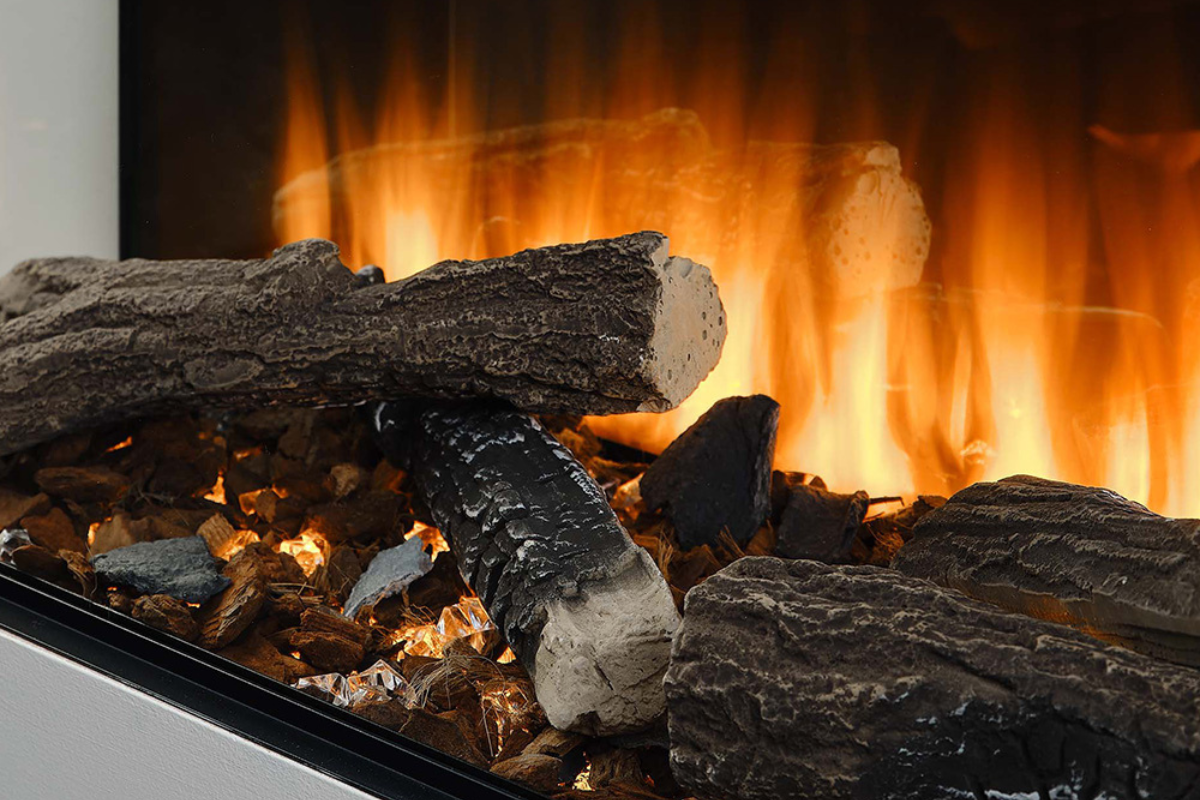
- Layered flame systems: Offer significantly more depth and realism by projecting flames among and behind the physical logs.
- Water vapour (mist): An ultra-realistic niche that uses illuminated mist to create 3D smoke and flames (though less typical for standard media walls).
👉 For a full breakdown of how flame technologies compare, see our guide: Which Electric Fires Look Most Realistic? (Flame Effects Compared).
👉 Not sure which type is right for your setup? Browse our media wall electric fires to compare styles, sizes, and flame effects.
How Media Wall Design Changes How Flames Look

Flame perception changes based on how your wall is built and decorated:
- Wall colour: Darker walls make flames look richer and deeper; light walls can wash them out.
- Recess depth: Shallow installations make the flame bed look flatter. Deeper recesses enhance the 3D illusion.
- TV position: A bright screen directly above the fire can create glare and alter the contrast of the flames below.
- Viewing angle: Consider where your sofas are. Some fires look great head-on but lose their depth from side seating.
💡 Worth knowing: Flame effects can appear different depending on lighting conditions. What you see in a showroom is a good baseline — just make sure the fire allows you to adjust brightness and colour for your home environment.
👉 Still planning your layout? See our guide to media wall layout ideas for every home.
Warm vs Cool Flames: Choosing the Right Colour Tone
The colour of the flame has a bigger impact on the overall feel of your media wall than most people expect — it sets the tone of the entire room.
Warm (amber/orange)

- The most realistic option
- Best for cosy living rooms
- Works perfectly with wood, neutrals, and traditional interiors
💡 Worth knowing: Most people default to buying fires with colour-changing flames… then leave them on the warm amber setting forever.
Cool (blue/white/purple)

- Modern, highly stylised
- Works well in minimalist or LED-heavy spaces
- Can feel artificial or cold if overused
👉 Want to see how different flame styles look in real setups? Explore our media wall customer gallery.
Brightness & Room Lighting: The Most Overlooked Factor
- ☀️ Bright room (daylight, large windows)
- In a room flooded with natural light, you need stronger flame visibility. Higher brightness settings are required to stop the fire from looking washed out.
- 🌙 Dark room (evening use)
- When the sun goes down, lower brightness equals more realism. If the flame is too bright in a dark room, it creates a harsh “screen saver” effect.
💡 Worth knowing: The best fires let you dial the brightness down properly across multiple levels, rather than just offering a basic on/off switch.
Matching Flame Effects to Your Room Style
- Cosy/traditional living room: Opt for soft, warm flames with subtle movement and highly detailed log fuel beds.
- Modern media walls: Choose slightly sharper flames, optional colour accents, and clean fuel beds (like glass crystals or glowing embers).
- Statement feature walls: Look for wider flames, layered 3D effects, and highly controlled brightness so the fire doesn’t overpower the room.
Common Mistakes That Ruin the Look
- ❌ Choosing based on showroom brightness alone:
- Showrooms are typically well-lit so you can clearly see flame detail. At home, especially in the evening, you’ll usually run the fire at a lower brightness. Make sure the model you choose has enough adjustment to suit both environments.
- ❌ Going too wide for the wall:
- A fire that stretches too close to the edges looks disproportionate. If you want that edge-to-edge appearance, look for a built-in “3-sided” media wall fire.
- ❌ Ignoring flame adjustability:
- If you can’t dim the flames, you’ll likely turn them off during movie nights.
- ❌ Picking colour-changing flames “just because”:
- Focus on the quality of the natural flame first. Colour-changing flames are fun, but you probably won’t use them as the main flame effect.
- ❌ Installing too high or too shallow:
- Ruins the viewing angle and flattens the depth.
👉 Avoid these mistakes entirely by starting with the right model — browse our media wall electric fires to compare options.
Best Media Wall Electric Fires for Realistic Flames
When you’re comparing media wall fires, specs only tell you part of the story. What actually matters is how the flame looks in a real living room, not just on paper.
💡 Worth knowing: The difference between an average flame effect and a great one isn’t always obvious on first glance — it shows over time, especially in low lighting.
Here’s what to prioritise depending on the result you want — along with examples of fires that do it particularly well:
Best for realism
Look for:
- Layered flame systems (not single flat projections)
- Hand-painted ceramic logs with variation in colour and texture
- Subtle flame movement, not fast or repetitive patterns
These are the models that hold up at lower brightness levels — which is where realism really shows.
🔥 Product examples:

Gazco eReflex 105R
Deep, layered flame effect with strong log integration that remains natural at lower brightness levels

Elgin & Hall Pryzm Arteon 1250 3SL
Detailed fuel bed and ember glow that works especially well in low-light, cosy settings

Evonic Halo 1500 XT
Advanced flame effects with strong depth, refined movement, and full adjustability, designed to look convincing across different lighting conditions
Best for modern media walls
Look for:
- Clean, wide-format designs with minimal framing
- Customisable fuel beds (logs, crystals, or mixed media)
- Adjustable colour accents that can be turned off, not just on
Modern setups benefit from flexibility — you want options, but not something that feels like a light show every night.
🔥 Product examples:

British Fires New Forest 1200
Clean, minimalist flame presentation with flexible fuel bed options (showroom display)

Evonic e-Series e1500
Clean, built-in design with flexible flame and lighting controls, ideal for sleek, modern media wall setups

Celsi DLX Electriflame 1000
Clean hole-in-the-wall design with strong visual impact and customisable flame settings, well suited to statement media walls
Best all-rounder
Look for:
- Strong natural flame tones as a default
- Full brightness control (not just high/low)
- Simple controls or app integration for easy adjustment
These are the fires that look good during the day, scale down properly in the evening, and don’t need constant tweaking.
🔥 Product examples:

Gazco eReflex 135R
Balanced flame realism and adjustability, making it a reliable choice for most rooms

Elgin & Hall Pryzm Arteon 1500
Consistent, natural-looking flame with straightforward controls and broad appeal

British Fires New Forest 1600
Wide, versatile design that works across both modern and more traditional interiors (showroom display)
Choosing the Right Flame (What You’ll Actually Notice Every Day)
You won’t notice the difference between a 1kW and a 1.5kW heat output on a daily basis.
You will notice the flame colour, the brightness, and the movement every single time you sit down.
When you’re choosing, think about how the flame will look in your home at 8 pm — and use the showroom to compare flame quality, depth, and adjustability in person.
How to Test Flame Realism in a Showroom

Seeing a fire in person is one of the best ways to judge flame quality — but only if you know what to look for.
Here’s how to quickly spot the difference between a convincing flame and one that just looks good at first glance:
1. Turn the brightness down
- Most fires are displayed at high brightness to stand out in a showroom.
- Ask to see it at a lower setting.
This is where weaker flame effects fall apart, and better ones still look natural.
2. Watch the flame movement
Look for:
- Irregular, natural movement
- Variation in height and intensity
Avoid:
- Repeating patterns
- Fast, overly uniform motion
If it looks like a loop, you’ll notice it every night at home.
3. Look at the base of the flame
This is where realism is won or lost.
- Do the flames appear to come from the logs?
- Or do they float above them?
Layered systems will blend flame and fuel bed together. Simpler models won’t.
4. Step to the side
Don’t just view it head-on.
Move slightly off-centre and check:
- Does the flame still have depth?
- Or does it flatten instantly?
This matters more than you think, especially in open-plan rooms.
5. Ignore colour modes (at first)
- Focus on the natural flame setting.
- If it doesn’t look good in warm amber tones, no amount of colour options will fix it.
💡 Worth knowing: A fire that looks great at multiple brightness levels and angles will almost always look good once installed in a media wall.
If you’re visiting a showroom, taking a minute to test these things properly makes it much easier to choose with confidence — especially when comparing similar models.
👉 Browse our full range of media wall electric fires to compare sizes, styles, and flame effects in more detail.
Media Wall Flame Effect FAQs
Will the heat from the electric fire damage my TV?
No, as long as it’s installed correctly. Most media wall electric fires use front-facing or downward heat output, which directs warm air into the room rather than up at your TV. Always follow the manufacturer’s clearance guidance — typically around 300mm to 400mm between the fire and the bottom of the screen.
How deep does my stud wall need to be for a realistic flame effect?
For a deeper, more realistic fuel bed, most media wall fires need a recess depth of around 150mm to 300mm. Slimline models are available for tighter spaces, but they usually offer less depth and a flatter flame effect.
Do I need ventilation or a chimney for a media wall electric fire?
No. Electric fires don’t produce combustion gases, so there’s no need for a chimney, flue, or external ventilation. You just need access to a standard UK plug socket within or behind the media wall.
Can I control the flame effects using my phone or voice?
Yes. Many modern electric fires come with app control and are compatible with Alexa or Google Assistant. This lets you adjust brightness, change flame colours, or turn the fire on and off without leaving your seat.
How do I clean the glass without affecting the flame effect?
Use a soft microfibre cloth and a standard glass cleaner. Spray the cleaner onto the cloth, not directly onto the fire, to avoid moisture getting inside. Clean glass helps maintain the depth and clarity of the flame effect.
Do electric media wall fires look realistic in daylight?
They can, but it depends on the model and brightness settings. In bright rooms, you’ll need higher flame brightness to maintain visibility. The most realistic fires still look convincing at lower settings in the evening, which is when you’ll notice the effect most.
Can I leave an electric fire on just for the flame effect?
Yes. Most electric fires allow you to run the flame effect without any heat output. This means you can use it year-round, even in summer, without warming the room.
What size electric fire should I use for a media wall?
The fire should be proportionate to the wall and TV size. As a general guide, most people choose a fire that spans between one-half and two-thirds of the wall width. Going too wide can make the setup feel unbalanced, while too small can look lost.
Are electric media wall fires expensive to run?
Flame-only mode is very low cost, as it just uses LED lighting. When using heat, running costs are similar to other electric heaters. Many people use the fire for visual effect most of the time and only use the heat when needed.
Find Your Perfect Media Wall Fire
A media wall is a visual feature first — get the flame right, and everything else follows.
- 👉 Browse our media wall electric fires
- 👉 Read our media wall electric fire buying guide
- 👉 See media wall layout ideas
Still exploring? Read our other media wall guides:
- 👉 Everything you need to know when planning a media wall
- 👉 Guide to building a media wall step by step
- 👉 How much does it cost to build a media wall?
- 👉 How to choose the right size TV for your media wall
- 👉 Media wall storage options explained
Need advice or want to see them in person?
- 📍 Visit our showroom: Not sure which will suit your space? Seeing flame effects side-by-side makes the differences much easier to spot. Compare flame effects, test brightness settings, and see how different styles perform in real setups at our showrooms.
- 📧 Get in touch: Speak to our team for tailored advice.
↑ Back to top | Jump to sections ↑
