



















Categories
How Much Heat Do Bioethanol Fires Produce?
Key Points
- Real Heat Output: Bioethanol fires produce genuine heat, typically ranging from 1kW to 3kW.
- Supplementary Heating: They are designed to provide ambient, secondary warmth, not to replace your central heating system.
- 100% Efficient: Because they don’t require a chimney, all the heat generated stays right in your room.
- Room Size: A standard 2kW bioethanol fire can comfortably warm a 15-20m2 room.
The Honest Answer Up Front
Bioethanol fires do produce real heat – but they are not designed to replace your central heating. Typical heat outputs range from 1kW to 3kW, depending on the burner size and fuel capacity. Ultimately, they are best suited for providing supplementary warmth and a beautiful ambience. While gas fires offer higher heat for primary use, bioethanol fires are similar to electric fires as they offer a stylish secondary heat source.
What is the Heat Output of a Bioethanol Fire?
Most wall-mounted and freestanding bioethanol models produce between 1.5 kW and 2.5 kW. Larger built-in or inset burners can push up to 3kW.
To put that into perspective:
- 1 kW is similar to the heat output of a small electric space heater.
- 2-3 kW is enough to noticeably warm a medium-sized room.
What size room can it heat?
As a general rule, a 2 kW unit can comfortably warm a space of approximately 15-20m2, depending on your home’s insulation.
How Do Bioethanol Fires Produce Heat?
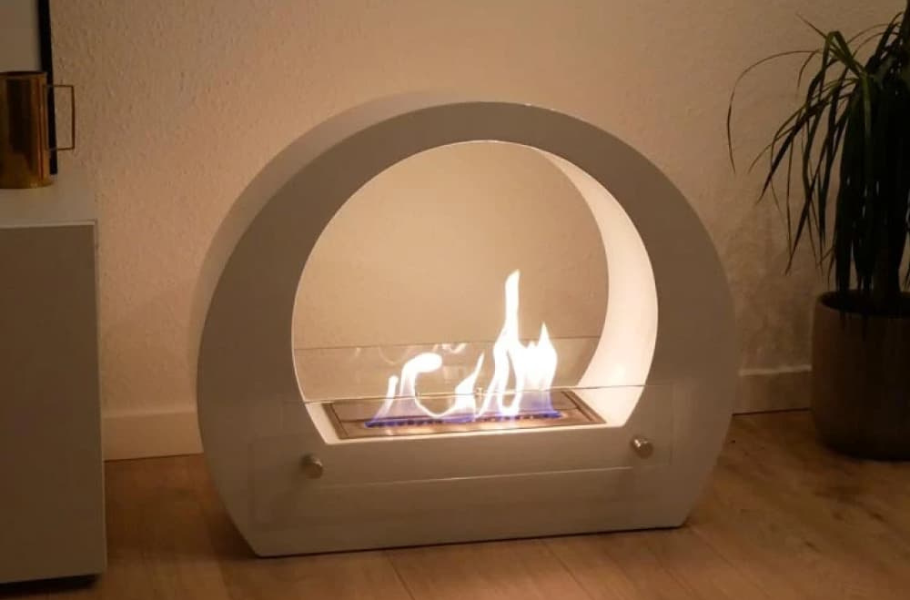
These fires use a real flame powered by liquid bioethanol fuel. Because they are clean-burning, they don’t require a chimney or flue. This means 100% of the heat stays in the room, providing both radiant heat and ambient warmth.
If you’re wondering, “Do bioethanol fires give off heat?” or “Are bioethanol fires warm enough?” – the answer is a resounding yes, provided you use them in the right space.
Factors That Affect Heat Output
- Burner Size: A larger fuel tray produces a larger flame, resulting in higher kW output.
- Fuel Quality: High-quality bioethanol burns much more efficiently and cleanly.
- Room Size & Insulation: Open-plan spaces will dilute the heat, whereas well-insulated rooms retain warmth beautifully.
- Ventilation: While they require basic ventilation for fresh air, excessive draughts will reduce warmth retention.
Are Bioethanol Fires Warm Enough in the UK?
In the chilly UK climate, bioethanol fires are ideal for taking the chill off living rooms, dining areas, bedrooms, and other spaces. However, they are not ideal as whole-house heating or as the primary heat source in large, open-plan homes. They are best used as a secondary heat source that adds atmosphere, style, and a cosy glow.
Bioethanol vs Electric vs Gas: Heat Comparison
- Electric fires: Typically 1-2kW (fan-assisted heat).
- Bioethanol fires: Typically 1-3kW (real flame radiant heat).
- Gas fires: Typically 3-5kW+ (Capable of primary heating).
Frequently Asked Questions (FAQs)
Do bioethanol fires really heat a room?
Yes – most produce between 1 and 3kW of heat, which is plenty to take the chill off a small to medium-sized room.
Are bioethanol fires cheaper than electric heating?
Fuel costs vary, but bioethanol is typically used for occasional, atmospheric heating rather than daily primary heating.
Can a bioethanol fire replace central heating?
No, they are designed purely as supplementary heating.
Do bioethanol fires waste heat?
No. Because there is no chimney, 100% of the heat remains in the room.
Who Are They Right For?
Bioethanol fires are perfect for homeowners wanting a real flame without expensive chimney work, renters in suitable spaces, media wall installations and modern interiors.
Explore our range of bioethanol fires at Direct Fireplaces to find the perfect heat output and style for your space.