



















Categories
What is Bioethanol?
Key Points
- What is it? A renewable liquid fuel made from fermented plant by-products.
- Chimney-Free: No flue, chimney, or gas connection is required.
- Clean Combustion: Burns efficiently without producing smoke, soot, or ash.
- Real Fire: Creates actual flames and supplemental heat, not just a visual effect.
As modern UK homes become better insulated and architectural trends shift, the traditional chimney is becoming a rarity in new builds. Yet the desire for a real, flickering flame remains as strong as ever. This has led to a surge in popularity for bioethanol fires – but for many customers, the question remains: “What exactly is bioethanol?”
Put simply, bioethanol is a renewable liquid fuel produced from plant by-products. It is designed to burn cleanly, producing no smoke, soot, or ash. For homeowners without a flue or chimney, it offers the magic of a real fire with minimal installation fuss.
What is Bioethanol Fuel Made From?
Unlike fossil fuels such as coal or natural gas, bioethanol is organic. It is derived from the fermentation of sugars from crops such as sugar beets, corn, and wheat. Once fermented, the liquid is distilled and refined into a clean-burning liquid fuel suitable for home heating.
Because it comes from plants, bioethanol is classified as a renewable fireplace fuel. It is widely considered carbon-neutral; the carbon dioxide released during combustion roughly equals the amount absorbed by the plants during their growth. This makes it a highly attractive, eco-friendly fire fuel for the environmentally conscious homeowner.
How Does Bioethanol Work in a Fireplace?
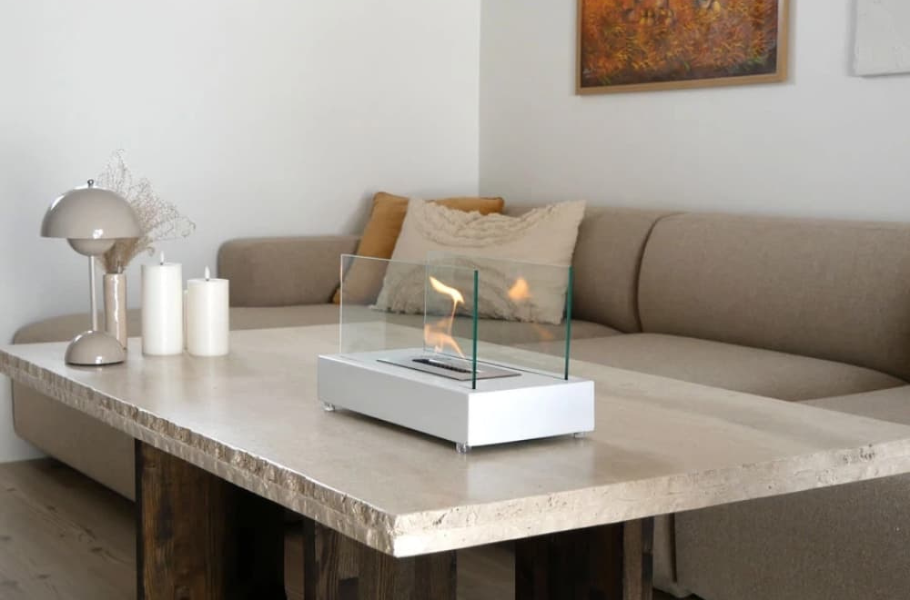
The mechanics of a bioethanol fire are refreshingly simple. The liquid fuel is poured into a dedicated burner tray within the fireplace unit. You then light the fuel manually using a long lighter.
Within moments, you have a real, dancing yellow flame. It’s not an electric screen or a water-vapour effect – it’s actual fire. However, because the combustion is so clean, there’s no need for a chimney, flue, or hard-wired gas connection. This allows for incredible design flexibility, letting you place a fire in rooms where it was previously impossible.
Is Bioethanol Safe?
Yes, bioethanol is safe for indoor use when used according to the manufacturer’s guidelines. Because it burns without releasing harmful smoke or particulates, you don’t get the soot buildup associated with solid fuel stoves.
However, standard fire safety applies. You must only use approved bioethanol fuel and, crucially, never refuel a hot burner. Always allow the mechanism to cool down completely before topping up the fuel. Regarding air quality, the fire consumes oxygen and releases a small amount of CO2 and water vapour, so standard room ventilation (like an open door or trickle vents) is sufficient.
Is Bioethanol Environmentally Friendly?
Bioethanol is widely considered a low-emission alternative to traditional fireplace fuels. By utilising renewable plant resources, it offers a sustainable heating option. While burning any fuel releases emissions, bioethanol has a significantly lower environmental impact than other fuels, making it a greener choice.
What Are the Benefits of a Bioethanol Fire?
If you are on the fence about switching to bioethanol, consider these key advantages:
- No chimney or flue required: Saves thousands on installation and building work.
- No gas connection needed: Perfect for all-electric homes.
- No ash or soot: Eliminates messy cleanup.
- Modern design: Sleek options are available for media wall-style designs and dividers.
- Portable: Many freestanding models can be moved from room to room.
- Ideal for flats: A perfect solution for high-rise living.
Is Bioethanol Right for Your Home?
If you want a renewable, clean-burning fire that offers a real flame effect without the hassle of a chimney, bioethanol is likely the perfect fit. Explore the full range of bioethanol fires at Direct Fireplaces today.