

















Categories
Light vs Dark Fireplace: Which Looks Better in Your Living Room?
⏱️ Time to read:
9–14 minutes
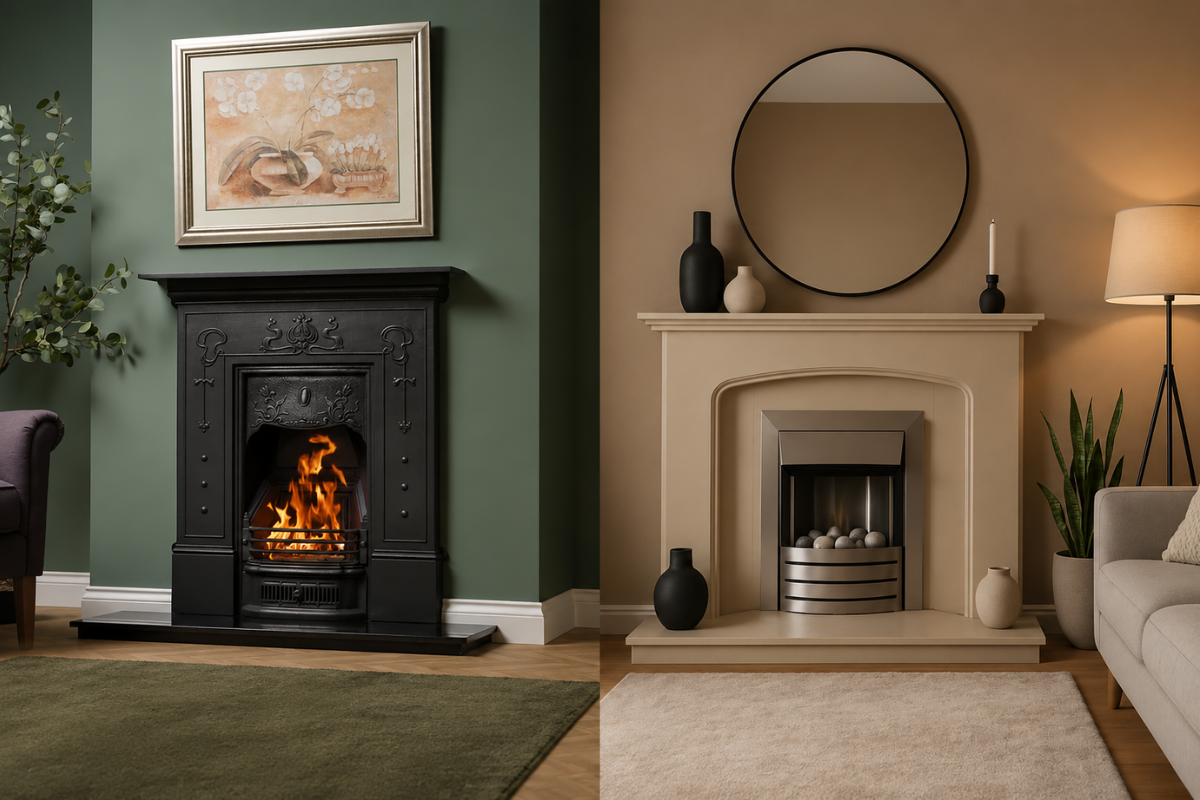
A fireplace isn’t just another feature in your room. It is a permanent architectural anchor. Because of its size and central placement, the colour and finish of your fireplace surround or suite can completely change how the entire space feels. Make the right choice, and your room feels cohesive and expertly designed. Make the wrong choice, and you risk an expensive visual mistake that throws off the balance of your home.
Depending on the finish you choose, the exact same room can suddenly feel:
- Larger or smaller
- Brighter or moodier
- Softer or more dramatic
- Open and airy or bold and cosy
Many homeowners focus entirely on the fire itself — the flame effect, the fuel bed, or the heat output — and completely underestimate how much the fireplace colour changes the room.
Before choosing a surround, suite, or fireplace finish, here’s how light and dark fireplaces affect the look and feel of a space.
🧠 Quick Answer: Light vs dark fireplace?
If you are in a rush and need immediate visual decision support, use this summary to guide your purchase.
Choose a light fireplace if:
- Your room feels small and you want to maximise the space
- Natural light is limited or your windows are small
- You want a brighter, more open, and airy feel
- You prefer softer styling without harsh visual contrasts
- You want the fireplace to blend naturally into the architecture
- Your style leans Scandinavian, minimalist, or contemporary
Choose a dark fireplace if:
- You want a strong, undeniable focal point in the room
- Your room gets plenty of natural light throughout the day
- You prefer high contrast and visual depth
- You want a luxury, premium, or statement feel
- You like bold modern, industrial, or classic traditional spaces
🔑 Key Takeaways
- Light fireplaces often make smaller rooms feel more open by reflecting ambient light rather than absorbing it.
- Dark fireplaces create stronger focal points, drawing the eye immediately and anchoring the seating arrangement.
- Natural light changes how fireplace colours behave; what looks dramatic in a bright room can feel heavy in a dark one.
- Light finishes blend more easily into a room, offering a safer choice for those who frequently change their décor.
- Dark finishes usually create more contrast and drama, elevating the perceived luxury of the space.
- Room size and lighting often matter more than trends when making a final purchase decision.
📍 Jump to section
Not sure whether a light or dark fireplace is right for your room? Jump straight to the sections that match your space, style, and lighting conditions.
- How Fireplace Colour Changes Room Size Perception
- Room Brightness Matters More Than People Think
- Which Styles Suit Light Fireplaces?
- Which Styles Suit Dark Fireplaces?
- Real-World Fireplace Combinations That Work
- Mistakes People Make When Choosing Fireplace Colours
- Not Sure? Ask Yourself These 5 Questions
- Find Your Perfect Fireplace Match
How Fireplace Colour Changes Room Size Perception
When you install a fireplace, you are introducing a large block of colour and texture into your living space. Human eyes perceive space based on how light interacts with the objects within it. Therefore, the colour of your fireplace directly manipulates how large or small your room feels.
Why light fireplaces can make a room feel bigger

Light fireplaces — especially those finished in white, cream, pale limestone, or light marble — are highly reflective. They bounce both natural sunlight and artificial room lighting back into the space.
This reflection creates a sense of openness. Furthermore, light fireplaces create softer visual boundaries. When a pale fireplace is set against a light-coloured wall, the edges of the fireplace blur slightly into the background. Because the eye isn’t stopped by a harsh line of contrast, the wall appears continuous, tricking the brain into perceiving the room as wider and taller than it actually is.
If you are dealing with a compact living room, a narrow Victorian terrace, or a modern new-build with standard ceiling heights, light finishes like pale stone or crisp white timber suites are incredibly effective at maximising your perceived square footage.
Why dark fireplaces create a cosier feel

Conversely, dark fireplaces absorb light. Finishes in matte black, deep graphite, slate, or dark cast iron carry immense visual weight.
When you walk into a room with a dark fireplace, your eye is immediately drawn to it. This creates a powerful visual anchor. Instead of the eye wandering around the edges of the room, it is pulled to the centre. This central focus naturally draws the seating arrangement inward, creating a feeling of intimacy and cosiness.
Dark fireplaces are excellent for large, cavernous rooms that feel cold or uninviting. By establishing a strong focal point, a dark surround grounds the space and makes it feel intentional and wrapped-around.
💡 Worth Knowing: Dark does not automatically make a room feel smaller. A common misconception is that dark colours always shrink a room. In reality, proportion and lighting dictate the outcome. A tall, sleek dark fireplace in a well-lit room draws the eye upward, highlighting the ceiling height. It only makes a room feel cramped if the fireplace is disproportionately large for the wall, or if the room lacks the lighting to balance the dark finish.
Room Brightness Matters More Than People Think
You cannot choose a fireplace colour without evaluating your room’s lighting. The exact same dark graphite surround will look like a stunning luxury feature in a south-facing room, and a looming black hole in a north-facing room.
Bright rooms with lots of natural light
If your living room features large windows, bi-fold doors, or a south-facing aspect, you have the architectural freedom to choose almost any fireplace finish. However, bright rooms are where dark fireplaces truly excel.
In a flood of natural light, a dark fireplace provides much-needed contrast. It prevents the room from feeling washed out or sterile. The natural light highlights the textures of dark materials — such as the grain in dark wood, the veining in dark marble, or the subtle sheen of graphite metal — adding drama and visual balance. The brightness of the room effortlessly offsets the visual weight of the dark suite.
Rooms with less natural light
If your room is north-facing, has small windows, or is shaded by outside trees, you need to be highly strategic. In these spaces, a dark fireplace can absorb the little light you have, making the room feel heavy, gloomy, or oppressive.
This is why lighter finishes often feel safer in darker rooms. A white, cream, or pale oak fireplace will prevent heaviness, maintain a sense of openness, and avoid overpowering the room. They act as secondary light sources by reflecting your lamps and ceiling lights.
💡 Worth Knowing: Less natural light often means lighter finishes are easier to work with.
Which Styles Suit Light Fireplaces?

If you are leaning towards a lighter finish, it helps to know which interior design styles naturally accommodate these tones. Light fireplaces are incredibly versatile, but they shine brightest in specific aesthetic frameworks.
- Scandinavian interiors: Scandi design relies on light, airy spaces, natural textures, and a lack of clutter. A pale wood or matte white fireplace suite blends perfectly with this ethos, offering warmth without visual noise.
- Minimalist spaces: For a sleek, uncluttered look, a light fireplace set flush against a light wall provides a seamless, architectural feel. It allows the fire itself to be the only moving, contrasting element.
- Family rooms: Light fireplaces, particularly those with smooth, easy-to-clean finishes like micro marble or painted timber, feel approachable and relaxed. They suit the everyday, high-traffic nature of family living spaces.
- Soft neutral schemes: if your home features taupes, warm greys, beiges, and soft earthy tones, a cream or pale stone fireplace harmonises beautifully, maintaining a calm, restorative atmosphere.
Which Styles Suit Dark Fireplaces?

Dark fireplaces are for those who want to make a statement. They require a bit more confidence to install, but the visual payoff is immense.
- Luxury modern spaces: High-end contemporary homes often use stark contrasts. A matte black or dark slate fireplace against a crisp white wall screams modern luxury and architectural intent.
- Traditional interiors: Period properties, Victorian homes, and classic interiors naturally suit dark cast iron inserts and deep mahogany or black surrounds. They respect the historical weight and gravity or traditional design.
- Industrial styling: Exposed brick, metal accents, and raw textures are hallmarks of industrial design. A dark, metallic, or graphite fireplace anchors this rugged aesthetic perfectly.
- Richer, hotel-inspired rooms: “Boutique hotel” styling relies on mood, atsmosphere, and rich colour palettes (like deep greens, navy blues, or plum). A dark fireplace enhances this moody, sophisticated, and immersive environment.
Real-World Fireplace Combinations That Work
To help you visualise your purchase, here are four proven combinations that interior designers use to balance light, dark, and texture.
| Combination | Visual Effect | Best Used For |
|---|---|---|
| Light fireplace + dark wall | Creates a striking, high-contrast focal point. The fireplace “pops” forward, highlighting its shape and the flames. | Moody living rooms where you still want the fireplace to look bright and prominent. |
| Dark fireplace + pale room | Anchors a floaty, light room. Prevents pale rooms from looking sterile by adding a bold, grounding element. | Modern, minimalist spaces needing a touch of drama and visual weight. |
| Light suite + natural wood textures | Creates a soft, organic, and highly textured environment. The transition between materials is gentle and calming. | Scandinavian, coastal, or relaxed family living spaces. |
| Dark fireplace + brass accents | Screams luxury. The dark background makes warm metallic tones glow, creating a premium, expensive aesthetic. | Traditional homes, period properties, or high-end modern renovations. |
When making your decision, consider not just the fireplace, but what will sit immediately around it.
Mistakes People Make When Choosing Fireplace Colours
When investing in a new fireplace, avoid these common visual pitfalls that can lead to buyer’s remorse.
- Choosing only from showroom photos: Showrooms and brochures feature massive rooms with 10-foot ceilings and professional studio lighting. A massive black marble surround looks great in a warehouse-sized showroom, but might swallow your standard-sized living room. Always scale the choice to your reality.
- Copying Pinterest inspiration without considering room size: You might fall in love with a moody, dark fireplace on social media, but if that photo was taken in a sprawling, sun-drenched loft and you live in a cosy cottage, the result will not be the same.
- Ignoring flooring and surrounding finishes: Your fireplace does not exist in a vacuum. If you have very dark wood floors, adding a dark fireplace might make the room feel like a cave. Contrast your fireplace with your flooring to ensure it stands out.
- Creating contrast without balance: If you put a heavy, dark fireplace on one side of a light room, the room will feel visually lopsided. You must balance a dark fireplace with other dark elements in the room, such as a dark rug, dark shelving, or dark window frames on the opposite side.
Not Sure? Ask Yourself These 5 Questions
If you are still on the fence about whether to purchase a light or dark fireplace, run through this quick checklist.
- Does my room get lots of natural light? (Yes = Dark is safe; No = Light is safer).
- Do I want my fireplace to stand out or blend in? (Stand out = Contrast with walls; Blend in = Match walls).
- Is my room small or spacious? (Small = Light maximises space; Spacious = Dark creates intimacy).
- Do I prefer calm or dramatic interiors? (Calm = Light/Neutral; Dramatic = Dark/Bold).
- Am I styling around modern or traditional design? (Both work, but dictate the material — e.g., modern dark matte vs traditional dark cast iron).
Your answers to these practical questions often make the decision much clearer than simply trying to follow the latest interior design trends.
Find Your Perfect Fireplace Match
Choosing between a light or dark fireplace is not about right or wrong. It’s entirely about understanding how you want your room to feel, and how the physical constraints of your space — like natural light and square footage — will interact with your choice.
Light fireplaces offer safety, brightness, and an illusion of space. Dark fireplaces offer drama, luxury, and a powerful visual anchor. By evaluating your room’s lighting, your preferred interior style, and the visual weight you want to introduce, you can make your purchase with absolute confidence.
Ready to find the perfect match for your home? Explore our full range of premium fireplace styles, finishes, surrounds, and suites today to find the exact look that will transform your living room.
You might also like:
- 👉 What fireplace is best for my living room? (Size, style and layout options)
- 👉 Electric vs gas vs bioethanol fires
- 👉 Which electric fireplace suite should you buy?
- 👉 Electric fire buying guide
- 👉 Gas or electric fires — which is best?
- 👉 What makes an electric fire look cheap vs premium?
- 👉 Period fireplaces in modern homes: How to get the look right
- 👉 Best contemporary gas fires for modern homes
- 👉 How to get a traditional fireplace look in a new build
- 👉 Fireplace wall colour ideas
↑ Back to top | Jump to sections ↑
